 Pin It
 There's something almost magical about discovering that the weeds covering your neighbor's lawn are actually edible treasure. Last spring, while walking past an unmowed yard dotted with cheerful yellow dandelions, I wondered if anyone had ever tried turning them into jelly. A quick search led me down a rabbit hole of foraging blogs and old preservation techniques, and soon I was kneeling in a pesticide-free field with a basket, carefully plucking golden petals. That first batch taught me that the most delicate, floral spreads sometimes come from the plants we've been trained to ignore.
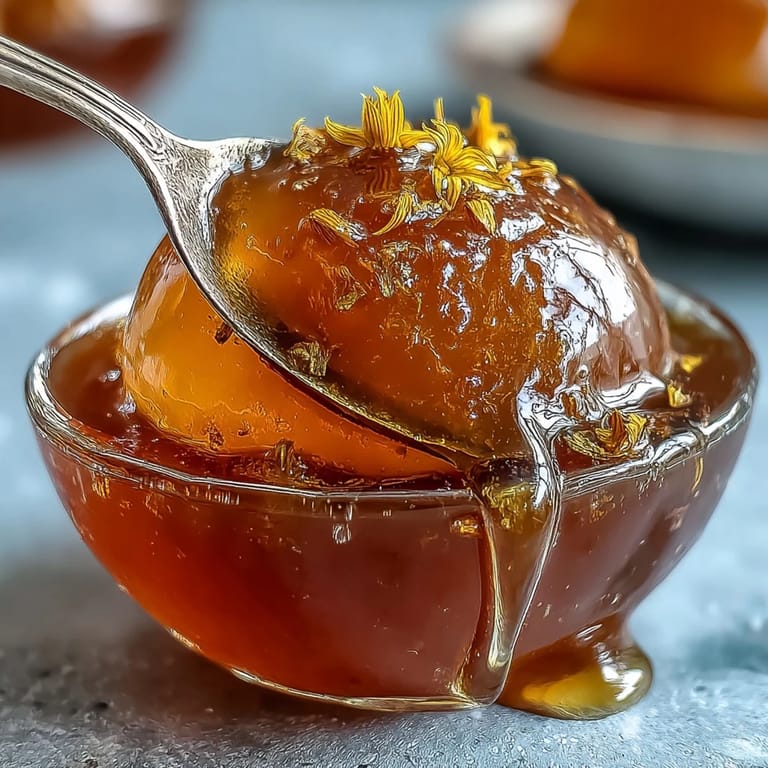
I'll never forget the moment my partner spread a thin layer on warm toast and paused mid-bite, eyebrows raised. "This tastes like honey but also like flowers," they said, confused and delighted. That's when I realized dandelion jelly isn't just a clever way to use foraged plants—it's genuinely delicious, with a subtle floral note and a texture like silk that makes ordinary breakfast feel special.
Ingredients
- Dandelion petals (2 cups, yellow parts only): Only the bright yellow petals matter; the green sepals underneath taste bitter and will ruin your jelly, which I learned the hard way my first attempt.
- Water (4 cups): This becomes your infusion base, so use filtered water if your tap water is heavily chlorinated.
- Lemon juice (2 tablespoons, freshly squeezed): This brightens the floral notes and provides the acid needed for proper jelling; bottled won't work as well.
- Powdered fruit pectin (1 package, 1.75 oz): The magic ingredient that transforms liquid into jelly; don't skip it or substitute with liquid pectin without adjusting ratios.
- Granulated sugar (4 cups): This is essential for preservation and texture, not just sweetness.
Tired of Takeout? 🥡
Get 10 meals you can make faster than delivery arrives. Seriously.
One email. No spam. Unsubscribe anytime.
Instructions
- Harvest and rinse your petals:
- Find dandelions growing far from roads and pesticides, then pluck only the yellow petals, leaving the bitter green bits behind. A gentle rinse under cool water removes any tiny insects or debris without bruising them.
- Brew the infusion:
- Combine petals and water in a saucepan, bring to a boil, then simmer for 5 minutes until the water turns a pale golden-green. The magic happens during the 4-hour steep, so cover it and walk away—patience is what creates that delicate floral flavor.
- Strain with intention:
- Pour everything through a fine mesh sieve or cheesecloth, pressing gently on the petals to coax out every last drop of liquid. You should have about 3½–4 cups of golden infusion; if you have less, top with a little water.
- Build the jelly base:
- Pour your infusion into a large pot, add lemon juice and pectin, and stir well until the pectin dissolves—this prevents lumps. Bring to a rolling boil over high heat, which should take about 5–7 minutes.
- Achieve the set:
- Add all the sugar at once and stir constantly, watching as the mixture returns to a hard rolling boil. Once it reaches 220°F on a candy thermometer, boil for exactly 1–2 minutes more, then remove from heat immediately.
- Skim and jar:
- Use a spoon to skim away any foam rising to the top, then ladle the hot jelly into sterilized jars, leaving a ¼-inch gap at the top. Wipe each rim clean, seal with hot lids, and process in a boiling water bath for 10 minutes.
- The final wait:
- Let the jars cool completely undisturbed for 12 hours before checking the seals—this is when the jelly actually sets and those satisfying pops confirm success. Don't move them around or you'll interrupt the setting process.
 Pin It
 There was a specific afternoon when I opened a jar from my spring batch and spread it on a scone for a friend visiting in November. She closed her eyes as she took a bite, and in that quiet moment, it felt like spring arrived in her kitchen mid-fall. That's when I understood that jams and jellies are about more than flavor—they're about bottling time itself.
Foraging Smart and Safely
The most important rule of dandelion foraging is knowing where your flowers come from. Avoid any area treated with herbicides, pesticides, or where dogs frequent—a dandelion growing in a chemically treated lawn will carry those toxins into your jar. I've learned to ask neighbors directly, scout a location multiple times before harvesting, and only pick from meadows and wild edges that feel truly untouched. The petals are so delicate that any contamination concentrates during cooking, so this isn't an area where you can cut corners.
Color, Flavor, and That Perfect Floral Note
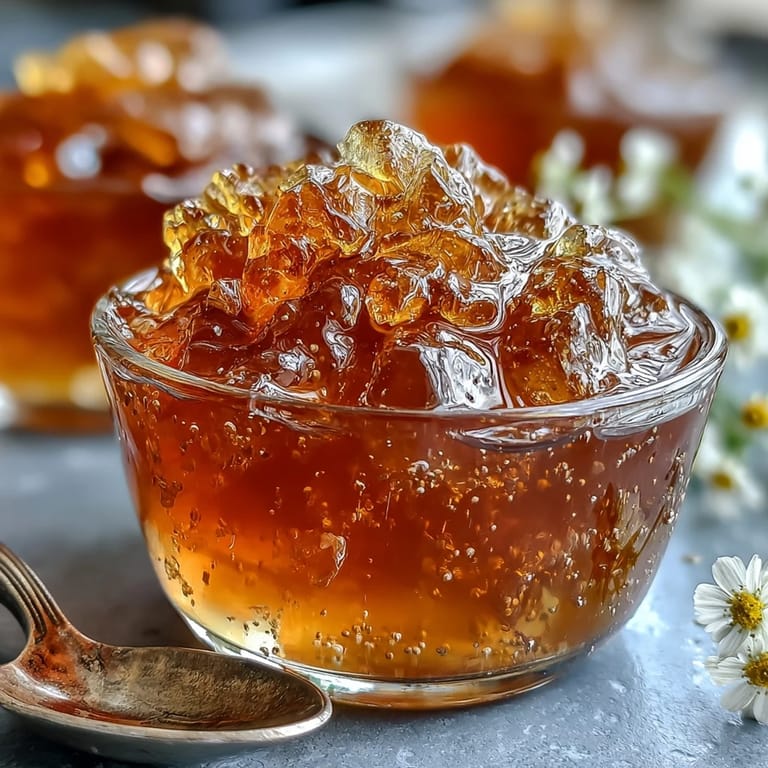
The longer your dandelion petals steep, the more golden and floral your infusion becomes. Four hours gives you a gentle, nuanced flavor; overnight steeping (8–12 hours) creates a deeper, almost honey-like complexity that catches some people off guard in the best way. The color will shift from pale yellow to amber-gold depending on your steep time, which is your visual guide to flavor intensity. I've noticed that fresher petals produce a brighter jelly, while petals a day old create something with more depth—both are beautiful, just different expressions of the same flower.
Variations and Personal Touches
Once you master the basic technique, dandelion jelly becomes a canvas for creativity. A few grates of orange zest added with the lemon juice creates a citrusy version that pairs beautifully with blue cheese. Some mornings I've stirred in a tiny pinch of lavender during the final boil for something unexpectedly romantic. You could even reduce the sugar by ½ cup and use low-sugar pectin if you prefer less sweetness, though the texture will be slightly softer—which honestly works fine for spreading on things.
- Try infusing with a single fresh mint leaf during the steep for a subtle green undertone.
- A whisper of vanilla extract added off-heat creates a dessert-like quality that's incredible on pancakes.
- Save your prettiest jars; this jelly's golden color is half the appeal when giving it as a gift.
 Pin It
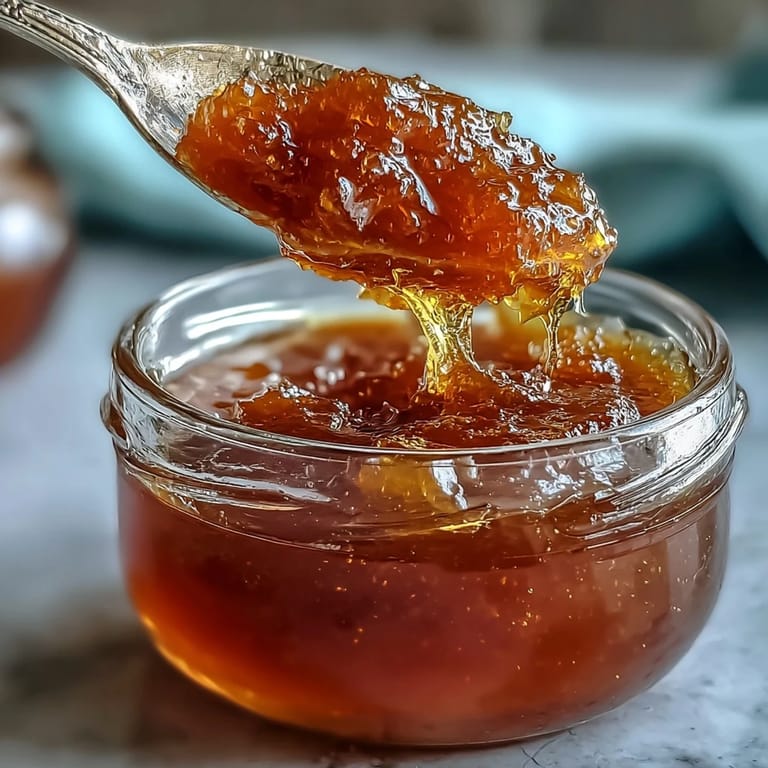
 There's a quiet satisfaction in twisting open a jar months later and finding that same spring-morning flavor waiting inside, untouched by time. It's proof that something beautiful can come from paying attention to what's growing around you.
Recipe FAQs
- → How do you prepare dandelion petals for infusion?
Remove all green parts like sepals and stems to avoid bitterness, then rinse gently to clear debris before simmering in water.
- → Why is steeping important in the process?
Steeping allows the petals to release their subtle floral notes into the infusion, enhancing the jelly’s delicate flavor profile.
- → What role does pectin play in setting?
Pectin works as a natural gelling agent that helps the mixture thicken and set when boiled with sugar and acid.
- → Can I adjust the sweetness of the jelly?
Yes, reducing sugar and using low-sugar pectin can create a less sweet spread without compromising texture.
- → What are some serving suggestions for the floral jelly?
It’s lovely spread on toast or scones and pairs beautifully with cheeses or as a glaze for cakes and pancakes.
- → Any tips for safe foraging of dandelions?
Only gather petals from clean, pesticide-free areas to ensure purity and safety of the jelly.