 Pin It
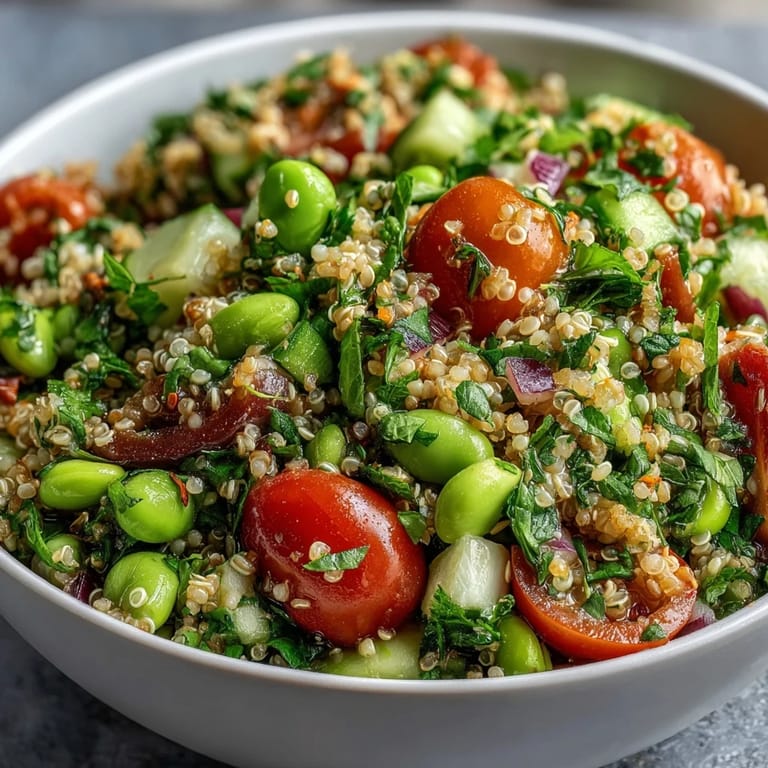
 Last summer, my neighbor showed up at a potluck with this salad, and I watched people go back for thirds while barely touching the heavier dishes. She caught me studying the layers and laughed, saying it was just quinoa, edamame, and whatever vegetables looked good that morning. What surprised me most wasn't the simplicity, but how the combination somehow felt both light and deeply satisfying, like eating something that actually nourishes you rather than just fills you up.
I made this for myself on a Tuesday afternoon when I'd promised to bring something to an impromptu dinner, and by the time I arrived, I realized I'd made enough to feel confident about it. My friend took one bite and immediately asked for the recipe, then admitted she'd been stress-eating sad desk salads for weeks. Seeing her face light up made me understand that good food doesn't have to be complicated, it just has to actually taste like something.
Ingredients
- Quinoa, rinsed: Those little seeds are your protein foundation, and rinsing them removes the bitter coating that nobody talks about until you've already made the mistake.
- Water: Use a 1-to-2 ratio and don't skip the rinsing step on the quinoa itself.
- Shelled edamame, fresh or frozen: The frozen ones are honestly better because they're already at peak ripeness and save you time, plus they thaw quickly in boiling water.
- Cherry tomatoes, halved: Their sweetness balances the earthiness of the grains, so pick ones that actually smell like tomatoes.
- Red bell pepper, diced: The bright color matters as much as the crisp texture it brings to every bite.
- Cucumber, diced: This adds a cooling element that prevents the salad from feeling heavy, especially on warm days.
- Red onion, finely chopped: A quarter of one is just enough to add a gentle bite without overwhelming the delicate herbs.
- Fresh parsley and mint, chopped: These two together create a brightness that makes people wonder what they're tasting, then realize it's just herbs being herbs.
- Olive oil: Use something you actually like tasting on its own, not the cheapest bottle.
- Lemon juice, rice vinegar, and Dijon mustard: This trio creates an emulsion that clings to the grains better than straight lemon would alone.
- Salt and pepper: Taste as you go because you can always add more, but you can't take it out.
Tired of Takeout? 🥡
Get 10 meals you can make faster than delivery arrives. Seriously.
One email. No spam. Unsubscribe anytime.
Instructions
- Cook the quinoa with intention:
- Rinse it under cold water first, then combine with fresh water in a medium saucepan. Bring everything to a boil, then immediately lower the heat to a gentle simmer, cover it, and let it sit undisturbed for 15 minutes. You'll know it's done when the water is gone and each grain has a little translucent tail showing.
- Blanch the edamame until just tender:
- While the quinoa does its thing, boil a small pot of salted water and drop in your edamame for 3 to 4 minutes, then drain them immediately. They should still have a slight snap when you bite them, not turn into little mush bombs.
- Build your salad base:
- Once both the quinoa and edamame have cooled enough to touch, toss them into a large bowl with all your fresh vegetables and herbs. This is where it starts looking like something worth eating.
- Whisk the dressing until it's creamy:
- In a separate small bowl, combine your oil, lemon juice, rice vinegar, mustard, salt, and pepper, then whisk it together until the mustard helps bind everything into something that actually clings to the salad rather than pooling at the bottom. This emulsion is what makes the whole thing come together.
- Marry the salad with the dressing:
- Pour the dressing over your salad and toss gently but thoroughly, making sure every grain gets a little coating. Taste it right then and adjust the salt and pepper if needed, because seasoning matters more than people think.
- Chill or serve immediately:
- You can eat this right away while it's still slightly warm, or refrigerate it for a few hours and serve it cold, whichever feels right for your day.
 Pin It
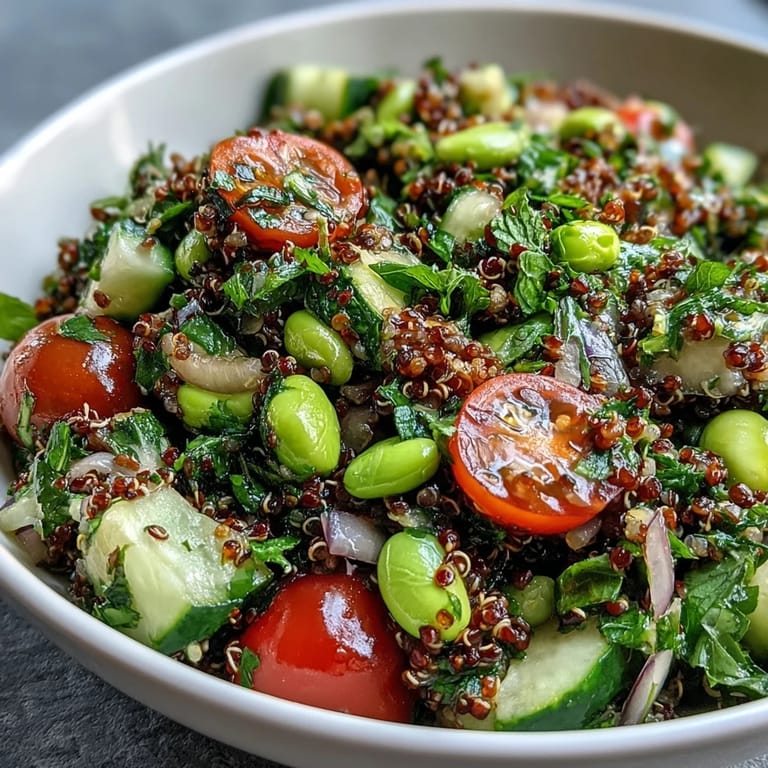
 A friend brought her kid to a casual dinner where I served this, and he actually asked for seconds of salad instead of pushing it around his plate. She looked shocked until I told her the secret was that everything in it tastes good on its own, so there's no hiding anything under heavy dressing or complicated techniques. That moment made me realize this salad works for anyone who's tired of pretending to enjoy food that's trying too hard.
Why This Salad Stays Fresh
One of the best things about making this ahead is that it actually improves as it sits in the refrigerator, with the grains gradually soaking up the dressing and developing deeper flavor. I've packed it for lunch on Sunday and eaten it on Wednesday without regret, which is not something I can say about most salads that get sad and soggy by day two.
How to Make It Your Own
This is the kind of recipe that genuinely wants you to mess with it, because the foundation is solid enough to handle whatever you have on hand or whatever you're craving that day. I've added everything from shredded carrots to diced avocado to crumbled feta, and it's never once disappointed me.
Small Moves That Make a Difference
The tiniest adjustments transform how this salad feels, so pay attention to the moments that seem small but aren't. Toasting sunflower seeds or sliced almonds adds a textural contrast that prevents everything from feeling like one soft, uniform bite, while a pinch of chili flakes or a swap to lime juice creates a completely different mood without changing the structure.
- Toast any nuts or seeds in a dry skillet for a minute before adding them, because raw almonds fade into the background but toasted ones announce themselves.
- If you're making this the day before, dress it lightly and keep extra dressing on the side, then toss it together right before serving so nothing gets waterlogged.
- Taste the salad at room temperature before chilling, because cold food tastes less seasoned than warm food, so you might need to add a little extra salt.
 Pin It
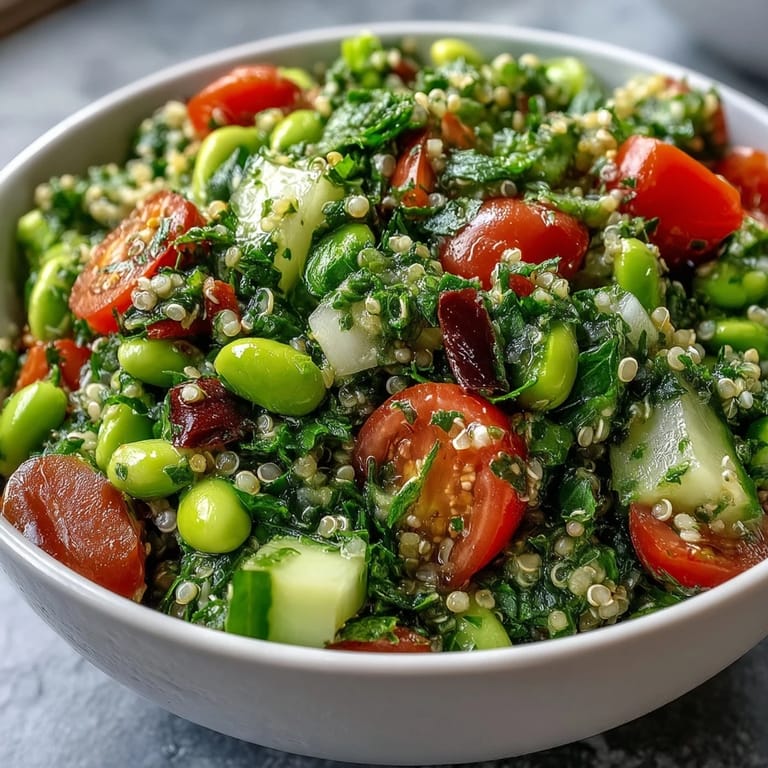
 This salad has become my go-to for literally everything from weeknight lunches to what I bring when someone asks me to contribute to a gathering. It never lets me down, and it somehow always makes people feel like they're eating something that respects their time and their taste buds.
Recipe FAQs
- → Can I make this edamame quinoa salad ahead of time?
Yes, this dish prep perfectly. The flavors actually improve after sitting for a few hours as the dressing marinates the ingredients. Store in an airtight container for up to 4 days.
- → Is edamame quinoa salad gluten-free?
Quinoa is naturally gluten-free, making this an excellent option for those avoiding gluten. Just double-check your mustard label to ensure it's certified gluten-free if you have celiac disease or high sensitivity.
- → What protein does edamame quinoa salad provide?
One serving delivers 11 grams of protein from the edamame and quinoa combination. Add grilled chicken, tofu, or hemp seeds to boost protein content even further if desired.
- → Can I use frozen edamame instead of fresh?
Absolutely. Frozen shelled edamame works perfectly and is often more readily available. Just boil according to package directions, usually 3-4 minutes, until tender.
- → How do I store leftover edamame quinoa salad?
Keep refrigerated in an airtight container for 3-4 days. The quinoa absorbs dressing over time, so you may want to add a splash of lemon juice or olive oil before serving leftovers.