 Pin It
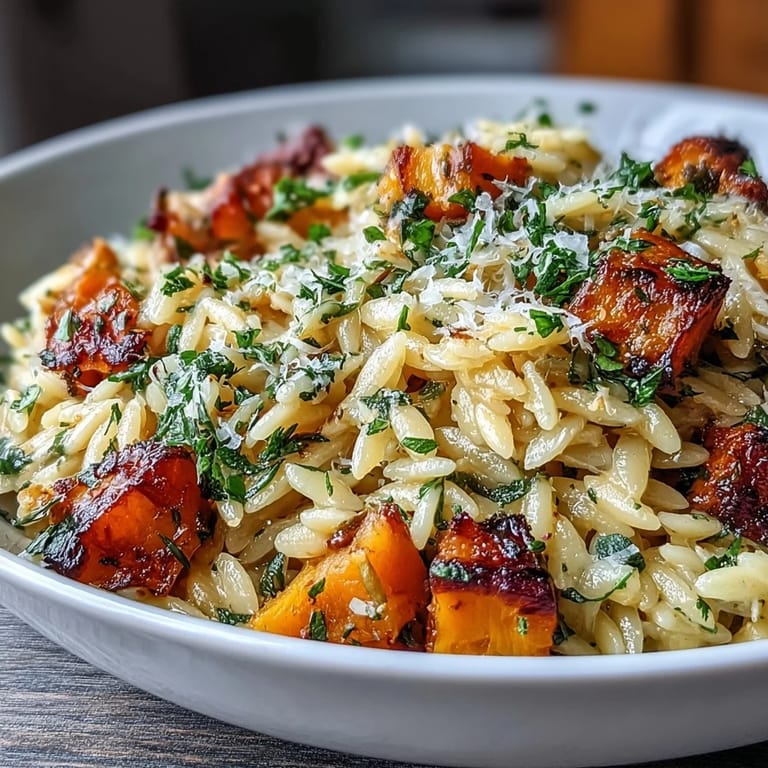
 Nothing perfumes my apartment quite like the sweet scent of roasting butternut squash and fresh sage. The first time I made this orzo dish, a gentle rain was drumming on my kitchen window and every corner felt more inviting as the squash caramelized. I only meant to test a quick weeknight dinner, but the golden cubes, fragrant herbs, and creamy orzo quickly turned it into something I looked forward to making again and again. There’s something effortless about its coziness that always seems to fit the mood as autumn settles in.
The last time I brought this to a small gathering, my friend Lucia kept dipping into the skillet for 'just one more spoonful' as we set the table. It was one of those nights where laughter and good smells seemed to bounce off every surface, and the dish disappeared faster than I expected. I always remember how everyone hovered around the pan, sneaking bits of crispy squash before dinner even started.
Ingredients
- Butternut squash: Roasting transforms this into sweet, caramelized cubes—choose one that's heavy for its size and deep orange inside.
- Yellow onion: Finely chopped for a subtle background note that cooks down into aromatic sweetness.
- Garlic: Just two cloves add plenty of rich depth; mince them fine so they melt right in.
- Fresh sage: Roughly chopped for their pop of earthy flavor; I like to use a generous handful, saving a few whole leaves to fry as garnish if I’m feeling fancy.
- Dry orzo pasta: Its tiny shape cooks up creamy and starchy, soaking up the broth for risotto-like comfort.
- Unsalted butter: Adds silkiness and a glossy finish—be sure to add that last tablespoon right at the end.
- Parmesan cheese: Grate fresh if you can for the best flavor; it brings the whole dish together with its salty, nutty bite.
- Low-sodium vegetable broth: Lets you control the seasoning and brings body to the orzo—homemade or carton both work great.
- Olive oil: For roasting and building flavor while you sauté; don’t skimp on the drizzle for the squash.
- Salt & black pepper: Season as you go; tasting at the end makes all the difference.
- Ground nutmeg (optional): Just a pinch adds a whisper of warmth without taking over.
Tired of Takeout? 🥡
Get 10 meals you can make faster than delivery arrives. Seriously.
One email. No spam. Unsubscribe anytime.
Instructions
- Roast the squash:
- Heat the oven to 425°F. Toss butternut cubes on a baking sheet with olive oil, salt, and pepper; roast for 20–25 minutes, turning halfway, until deeply golden and fork-tender.
- Sauté aromatics:
- In a large skillet, warm olive oil and butter over medium heat. Add onion and cook until soft and translucent, about 4 minutes, then stir in garlic and half the sage, letting them sizzle just until you smell the herbs.
- Toast orzo:
- Mix in the orzo and stir constantly for 2 minutes—listen for the faint crackle as it toasts.
- Simmer with broth:
- Add vegetable broth in 1/2 cup splashes, stirring often and letting orzo absorb the liquid before the next pour, until all liquid is used and orzo is creamy but still has some bite (12–15 minutes).
- Finish and season:
- Fold in roasted squash, remaining butter, Parmesan, nutmeg if using, and reserved sage. Taste and adjust salt and pepper; serve warm, topped with extra cheese and fried sage leaves if you like.
 Pin It
 It’s become my go-to comfort dish to share; once, a simple weeknight supper turned memorable when my neighbor knocked just as I grated the last pile of Parmesan. We chatted over bowls at the kitchen counter, each forkful bringing just a little more warmth to an otherwise chilly evening.
Finding the Best Butternut Squash
Don’t stress if your squash is oddly shaped—what matters most is a firm feel and vibrant orange flesh when you cut it open. Sometimes I get a little competitive with myself about how quickly (or how tidily) I can peel and cube the squash, but perfection isn’t required for flavor here. Just make sure your cubes are about the same size so they roast evenly.
Playing with Herbs and Cheese
Sage is classic, but I’ve swapped in thyme or a bit of fresh rosemary on days when the herb drawer was sparse. The Parmesan’s salty kick is the star finish, though you could lean into another hard cheese like Grana Padano or even a sprinkle of crumbled goat cheese for contrast if you’re feeling bold.
Quick Fixes for Busy Nights
Fresh butternut squash is lovely, but I’ve definitely resorted to pre-cut cubes from the store on a hectic Tuesday. If you’re in a real pinch, you can start the squash in the microwave before roasting to speed things up, or even stir in a handful of baby spinach at the end for a little extra color (and nutrition).
- Always let the orzo rest off heat so it thickens up nicely.
- A squeeze of lemon right at the end brightens it if it feels too rich.
- Leftovers reheat beautifully with a splash of broth or water.
 Pin It
 No matter the season or company, this is a bowl that brings the table together and never lasts long enough for seconds. Hope you find it as comforting on a quiet night or with friends filling your kitchen.
Recipe FAQs
- → Can the dish be made vegan?
Yes, simply use plant-based butter and replace Parmesan with nutritional yeast or a vegan cheese alternative.
- → What can I use instead of orzo pasta?
Small pasta shapes like rice-shaped pasta, pearl couscous, or arborio rice work well in this preparation.
- → How do I avoid mushy squash?
Roast the squash at high heat and avoid overbaking. Stir it in gently at the end to keep pieces whole.
- → What herbs complement sage in this dish?
Thyme and rosemary both pair well with sage and can add extra depth to the flavor profile.
- → Is this suitable for meal prep?
Yes, it keeps well for up to 3 days in the fridge. Add extra broth when reheating to refresh the creamy texture.
- → Which wine pairs best?
Pinot Grigio or lightly oaked Chardonnay complement the savory notes and creaminess of the dish.