 Pin It
 My neighbor brought over a still-warm sourdough onion bagel one Saturday morning, and I bit into it expecting something ordinary—instead, the tangy crumb practically dissolved on my tongue, followed by this sweet, caramelized onion richness that lingered in the best way. She laughed when she saw my expression and said she'd finally mastered the technique after years of bagel experiments. That afternoon, she walked me through her process, and what struck me most wasn't the complexity but how forgiving the dough actually is once you understand the rhythm. Now I make these regularly, and they've become my secret weapon for impressing people at breakfast or transforming a simple sandwich into something memorable.
I made a batch on a rainy Sunday when my partner was working late, and the smell of caramelizing onions mixed with that distinctive sourdough funk filled the whole apartment—it was so comforting that I just sat at the kitchen counter watching them puff up in the oven, practically hypnotized. By the time he got home, there were three fresh bagels waiting, and we sat together at midnight eating them warm with cream cheese and smoked salmon, barely talking because the food said everything.
Ingredients
- Active sourdough starter (100 g): This is your flavor engine—use one that's bubbly and ready, fed a few hours before mixing so it's at peak activity.
- Bread flour (400 g): Don't skip this; all-purpose flour won't give you that chewy, bagel-shop texture you're chasing.
- Whole wheat flour (50 g): Just enough to add subtle nuttiness and complexity without overpowering the sourdough tang.
- Sea salt (10 g): Enhances the dough structure and balances sweetness; measure carefully so it doesn't overwhelm.
- Granulated sugar (25 g): Feeds the yeast gently and adds slight sweetness that plays against the tangy starter.
- Lukewarm water (240 ml): Temperature matters—too hot kills the starter, too cold and fermentation stalls.
- Yellow onion (1 large, finely chopped): Yellow onions caramelize into that golden sweetness; red onions taste too sharp for this application.
- Olive oil or unsalted butter (1 tbsp): Butter gives deeper flavor, but olive oil works if you prefer.
- Barley malt syrup: This is the bagel world's secret—it adds a subtle sweetness and color that honey can't quite replicate, but honey absolutely works in a pinch.
- Baking soda (1 tsp): Alkalizes the boiling water so bagels develop that glossy, chewy exterior.
Tired of Takeout? 🥡
Get 10 meals you can make faster than delivery arrives. Seriously.
One email. No spam. Unsubscribe anytime.
Instructions
- Caramelize the onions first:
- Heat oil or butter in a skillet over medium heat, add your finely chopped onions with salt, and let them cook low and slow for 8–10 minutes until they're soft, golden, and smell almost sweet. This takes patience—rushing them means they won't develop that complex caramelization, so resist the urge to crank up the heat.
- Mix the dough:
- Combine your active starter, both flours, salt, sugar, and lukewarm water in a large bowl, stirring until everything is shaggy and there are no dry pockets. The dough will feel loose and sticky right now, which is exactly right.
- Knead and rest:
- Work the dough for 8–10 minutes—by hand or with a mixer on low speed—until it becomes smooth and elastic with a slight spring. Cover it and let it rest at room temperature for 4 hours, performing two stretch-and-folds (grab one side, stretch it up and fold it over itself) in the first 2 hours, about 30 minutes apart.
- Cold ferment overnight:
- Refrigerate the dough for 8–12 hours; this is where the sourdough magic happens and your flavor deepens significantly. The cold also makes the dough easier to shape.
- Shape the bagels:
- Divide the cold dough into 8 equal pieces, shape each into a ball, then poke a hole in the center and gently stretch it into a bagel ring with about a 2-inch hole diameter. It's okay if they're not perfectly uniform—rustic is honest.
- Proof for an hour or two:
- Place shaped bagels on parchment paper, cover them loosely, and let them rise at room temperature for 1–2 hours until they're slightly puffy but still have a bit of density when you press them gently. They shouldn't double in size like bread dough.
- Boil and top:
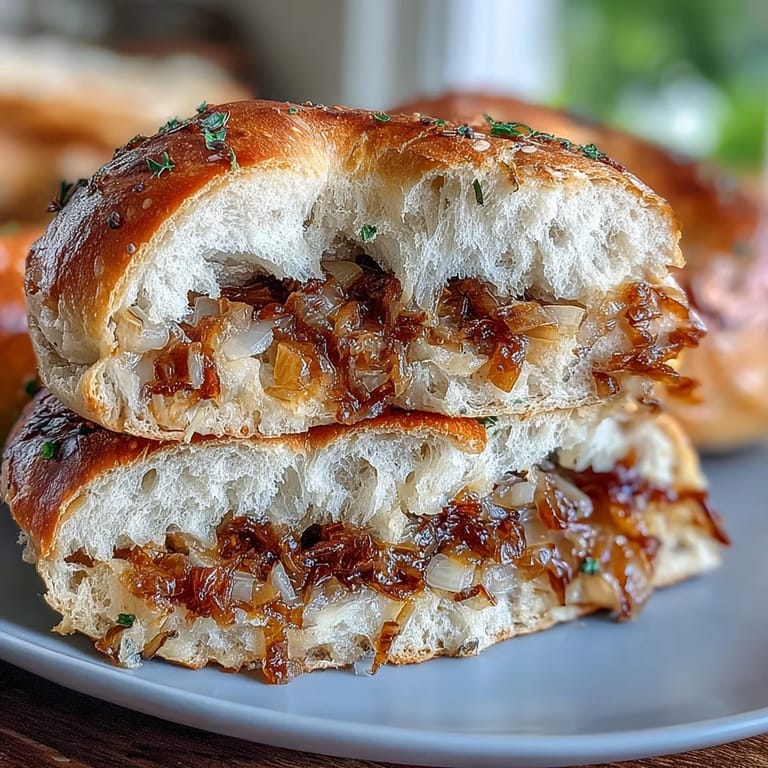
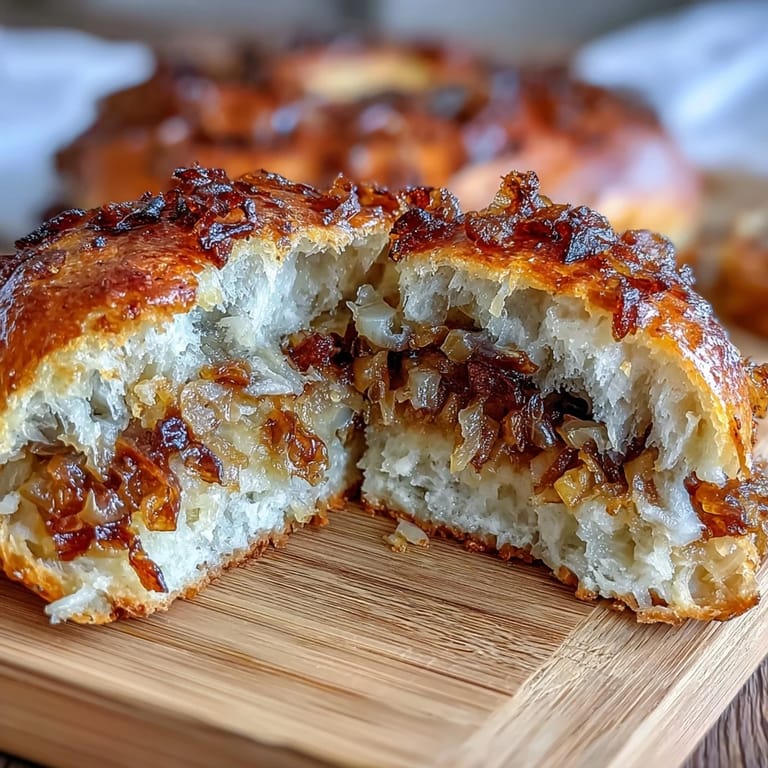
- Preheat your oven to 220°C (425°F), bring water with barley malt syrup and baking soda to a rolling boil, then carefully drop bagels in one or two at a time for 1 minute per side. Remove them with a slotted spoon, return them to the baking sheet, and while they're still damp, press your caramelized onions onto the tops—they'll stick beautifully.
- Bake until golden:
- Bake for 20–25 minutes until the bagels are deep golden brown and sound hollow when you tap the bottom. Trust your senses here; the color and sound are better guides than any timer.
- Cool completely:
- Transfer bagels to a wire rack and let them cool—I know it's hard to wait, but they'll set up properly and taste even better once they've cooled.
 Pin It
 There's a moment, usually on my second or third batch, when I stop thinking about temperatures and timers and just feel the dough—knowing exactly when to shape it or when the proof is done just by looking at it. That's when bagel-making stops being a recipe and becomes something you actually know how to do.
About Sourdough Fermentation
The long overnight fermentation is where sourdough's reputation for flavor comes from, and it's honestly non-negotiable if you want that distinctive tang that makes people ask what bakery you bought these from. The cold fermentation also makes the dough less sticky and easier to shape, which is a practical gift on top of the flavor benefit. I've found that 10–12 hours in the fridge gives the deepest flavor without the dough becoming too acidic or difficult to work with.
The Science of Boiling
Boiling bagels is what separates them from regular bread rolls—it gelatinizes the outside layer of starch, which creates that chewy, slightly crispy exterior that's iconic. The barley malt syrup adds subtle sweetness and helps with browning, but it's really the baking soda that does the work, raising the pH so the exterior sets quickly and develops that glossy finish. I used to skip this step thinking it was extra fuss, and the result was depressing—bagels that felt more like fancy rolls and tasted flat.
Storage and Variations
These bagels freeze beautifully for up to a month, so you can slice and freeze them individually, then toast straight from frozen whenever the craving hits—they come out almost as good as fresh. Once you master the base, the onion topping is just the beginning; I've made versions with everything bagel seasoning mixed into the onions, or topped with crispy shallots and thyme for something more sophisticated. The same dough also works wonderfully with a simple poppy seed or sesame topping if you want to keep things classic.
- Slice and freeze bagels individually in a freezer bag for grab-and-toast convenience anytime.
- Experiment with the onion topping by adding crispy bacon, fresh herbs, or even a sprinkle of everything bagel seasoning.
- Make sure your sourdough starter is truly active and bubbly before you start, or the whole batch will be flat and sour instead of fluffy and tangy.
 Pin It
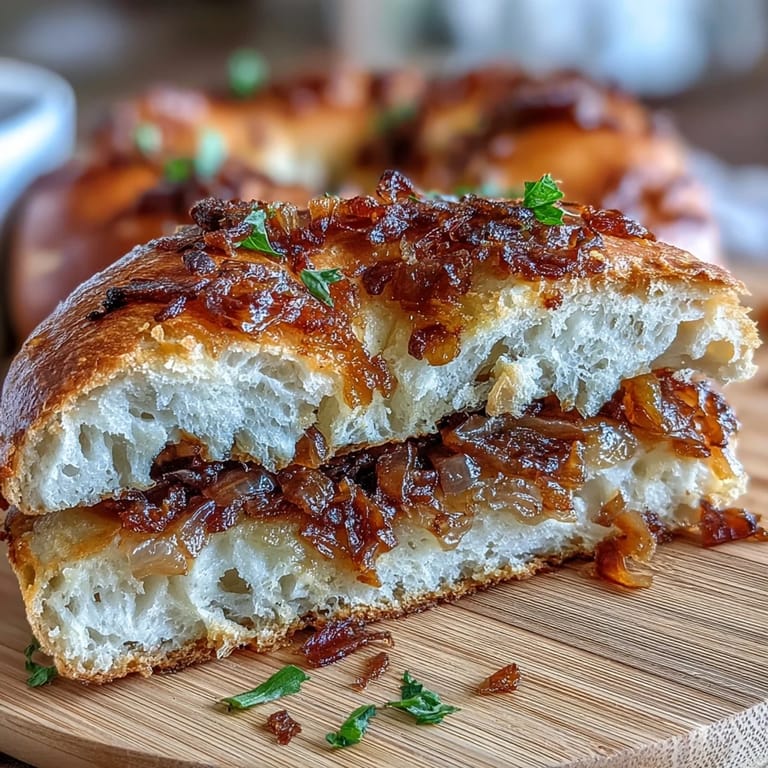
 Making sourdough onion bagels is one of those kitchen projects that feels impressive to other people but becomes genuinely enjoyable once you've done it a couple times. These are the kind of bagels worth waking up early for.
Recipe FAQs
- → How does the sourdough starter affect the bagels?
The sourdough starter provides natural fermentation, adding a tangy flavor and chewy texture to the bagels.
- → What is the purpose of boiling bagels before baking?
Boiling helps set the crust, creating a shiny surface and characteristic chewiness unique to bagels.
- → Can I substitute honey for barley malt syrup in the boiling water?
Yes, honey serves as a suitable alternative, lending a subtle sweetness while aiding in crust formation.
- → How should the onions be prepared for the topping?
Onions are finely chopped and sautéed in olive oil or butter with salt until soft and golden before topping the bagels.
- → What is the ideal fermentation time for best flavor?
Allowing the dough to ferment overnight (8–12 hours) enhances flavor complexity and improves texture.