 Pin It
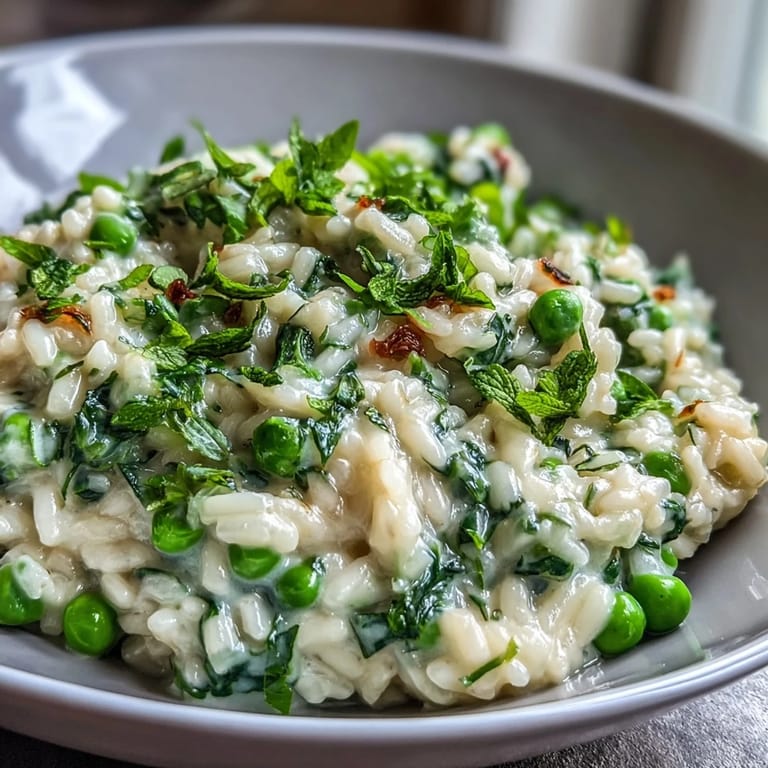
 There's something about the first warm afternoon in spring that makes you want to cook with your windows open. I was standing in my kitchen watching the light change through the trees when I realized I had a bag of those impossibly green peas sitting in my freezer, just waiting. That's when risotto came to mind—not the heavy, autumnal kind, but something that tastes like the season itself, bright and creamy and finished with mint that smells like hope.
I made this for my neighbor last April when she'd just come home from the hospital, and watching her face light up at that first spoonful taught me something about food that recipes don't usually capture. She said it tasted like someone understood what her body and soul needed at exactly that moment, and I realized risotto done right isn't just dinner—it's a conversation without words.
Ingredients
- Fresh or frozen spring peas, 1 cup: These are the soul of the dish; frozen ones are honestly just as good as fresh if they're of decent quality, and they thaw perfectly into the warmth of the risotto.
- Arborio rice, 1 1/2 cups: This short-grain Italian rice is crucial—its high starch content releases into the broth and creates that signature creamy texture without any cream needed.
- Vegetable broth, 4 cups: Keep it warm the whole time; cold broth will shock the rice and mess with the timing and texture.
- Small onion, finely chopped, and 2 cloves garlic, minced: These build the flavor foundation, so don't skip the mincing—you want them to dissolve into the rice, not sit as chunks.
- Dry white wine, 1/2 cup: It adds acidity and depth; use something you'd actually drink, because the cheaper stuff can taste thin and forgettable.
- Unsalted butter, 3 tablespoons divided, and Parmesan cheese, 1/2 cup grated: Butter at the end creates that glossy, luxurious finish, and freshly grated Parmesan makes all the difference.
- Fresh mint leaves, 2 tablespoons finely chopped: Add this at the very end so it keeps its bright flavor and that herbal punch that defines spring.
- Lemon zest, optional: A single zing of brightness that ties the whole dish together without making it taste like lemon.
- Extra-virgin olive oil, 2 tablespoons: Quality matters here since it's one of the few raw ingredients, so use something you actually like the taste of.
- Heavy cream, 1/4 cup optional: I usually skip this because the risotto gets creamy enough from the starch in the rice, but on days when I want extra luxury, it's there.
- Salt and freshly ground black pepper: Taste as you go and season at the end when you know what you're working with.
Tired of Takeout? 🥡
Get 10 meals you can make faster than delivery arrives. Seriously.
One email. No spam. Unsubscribe anytime.
Instructions
- Start your broth on its low, gentle journey:
- Pour your vegetable broth into a medium saucepan and bring it to a simmer over low heat. Let it stay there, steaming quietly in the background, for the whole cooking process—warm broth will fold into the rice smoothly and help it cook evenly.
- Build your flavor base:
- In a large, heavy-bottomed skillet, warm the olive oil and 2 tablespoons of butter over medium heat. Add your chopped onion and let it cook, stirring occasionally, until it's soft and translucent, about 4 minutes—you're looking for it to turn almost glassy.
- Wake up the garlic:
- Add your minced garlic and cook for just 1 minute, stirring constantly, until the kitchen smells incredible and fragrant. Don't let it brown or it'll turn bitter and harsh.
- Toast your rice:
- Stir in the Arborio rice and keep stirring constantly for 2 minutes—this coating of butter helps each grain stay individual and creates that texture you're after. You'll notice the grains getting slightly translucent at the edges, which is exactly what you want.
- Add the wine and let it sing:
- Pour in your white wine and stir until it's mostly absorbed into the rice, about 2-3 minutes. This adds a subtle acidity and complexity that you won't taste directly but will absolutely feel in the final result.
- Begin the patient ladling:
- Now comes the meditative part—add one ladleful of warm broth at a time, stirring frequently. Wait until each addition is mostly absorbed before adding the next one; this is how the rice releases its starch and becomes creamy, about 18-20 minutes total.
- Sneak in the peas:
- When you're about 5 minutes away from the rice being done (it should be creamy but still have a tiny bit of firmness when you bite it), stir in your peas and keep stirring gently.
- Finish with soul:
- Remove from heat and stir in your last tablespoon of butter, the grated Parmesan, the chopped mint, and lemon zest if you're using it. This is where the dish transforms into something silky and complete, with flavors that suddenly sing together.
- Rest and serve:
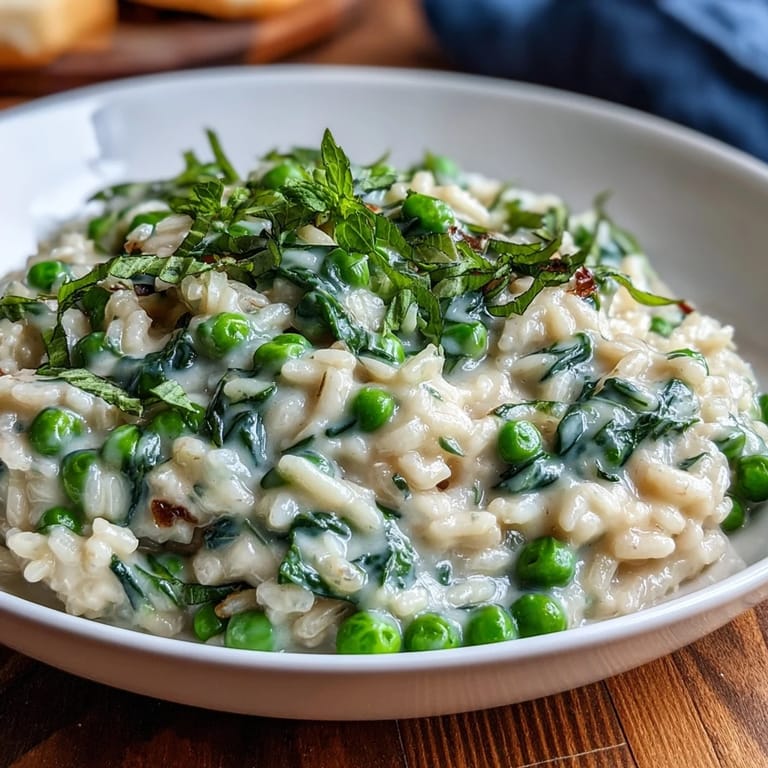
- Let the risotto sit for 2 minutes—this allows everything to settle and the flavors to marry. Serve immediately in warm bowls, with extra mint and Parmesan scattered on top if you're feeling generous.
 Pin It
 My friend told me later that what stuck with her wasn't just how the risotto tasted, but the fact that I'd stood there for half an hour, stirring and pouring and caring about something so small. Food done with presence has a different energy than food made on autopilot.
The Mint Question
I used to chop my mint and add it to risotto 10 minutes before serving, thinking it would infuse the whole dish. Then someone pointed out that I was basically cooking away all the brightness I was after, so now I wait until the very last moment. The difference is subtle but profound—it's the difference between a hint of mint and mint that actually matters.
When to Use Frozen Peas vs. Fresh
Spring peas are a texture thing more than anything—fresh ones stay a little firmer and have that pop you remember from childhood. Frozen peas are frozen at peak ripeness and honestly work beautifully here because they thaw into the warmth of the risotto without losing their sweetness. Pick based on what you have available and what season you're in; either way, they'll taste right.
Variations and Finishing Touches
Once you understand how risotto works, it becomes a template you can play with endlessly. The technique is always the same—it's the additions that change with your mood and the season.
- Baby spinach wilts beautifully into risotto in the last minute, adding earthiness without overwhelming the delicate pea and mint flavors.
- Toasted pine nuts scattered on top add a subtle crunch that echoes against the creamy rice in the best way.
- A splash of white wine pairing, like a Sauvignon Blanc or light Pinot Grigio, will make your whole dinner feel intentional and graceful.
 Pin It
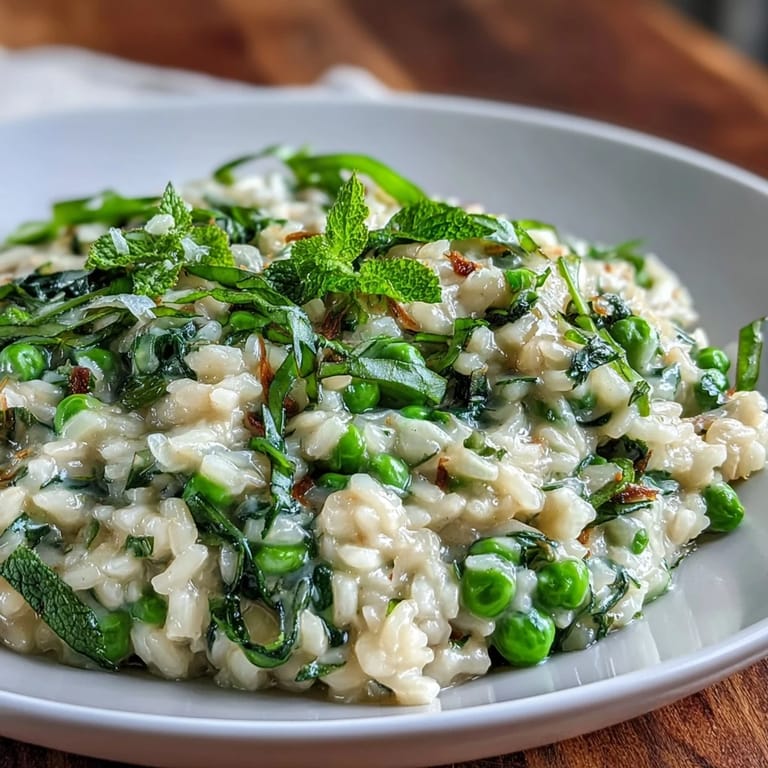
 This risotto is proof that sometimes the simplest meals, made with care and attention, become the ones people remember. Cook it when you want to feel like you're giving something real to someone you care about.
Recipe FAQs
- → What type of rice is best for this dish?
Arborio rice is ideal due to its high starch content, which creates the creamy texture characteristic of this dish.
- → Can I use frozen peas instead of fresh ones?
Yes, frozen peas can be added during the final cooking stages without compromising flavor or texture.
- → How does the mint influence the overall flavor?
Fresh mint adds a refreshing, aromatic brightness that balances the richness of the Parmesan and butter.
- → Is it necessary to use white wine in the cooking process?
White wine lends acidity and depth, but it can be replaced with extra vegetable broth if preferred.
- → What alternatives can be used for Parmesan?
For non-dairy options, plant-based cheese alternatives work well to maintain a savory note.