 Pin It
 The smell hit me before I even opened the door, that unmistakable aroma of dark roux mingling with the holy trinity of vegetables. My neighbor was making étouffée, and when she saw me pause on the stoop, she waved me in without a word. That afternoon, standing in her tiny kitchen while she taught me to stir the roux without panic, I learned that some recipes aren't just about food. They're about patience, about trusting the process even when your arm aches from constant stirring.
I made this for my sister the week she moved into her first apartment, back when her kitchen consisted of three mismatched pots and a wooden spoon I'd given her as a housewarming gift. We stood side by side, me talking her through the color changes in the roux while she panicked every thirty seconds that we were burning it. When we finally sat down to eat, bowls balanced on cardboard boxes, she got quiet in that way that means the food hit deeper than hunger. She still texts me every few months asking if I remember that night, as if I could possibly forget.
Ingredients
- Vegetable oil and all-purpose flour: These two humble ingredients create the roux, the soul of this dish, so measure them equally and commit to stirring without distraction once you begin.
- Onion, green bell pepper, and celery: The holy trinity of Cajun cooking, diced small so they melt into the sauce and release their sweetness slowly, building a base that holds everything together.
- Garlic: Minced fine and added after the vegetables soften, it blooms in the hot roux for just a minute, releasing fragrance without bitterness.
- Shrimp: Choose medium to large shrimp, peeled and deveined, because they hold their shape and sweetness even as they simmer in the rich, spiced gravy.
- Seafood stock: This adds depth that water cannot match, though chicken stock works in a pinch if that's what your pantry offers.
- Worcestershire sauce: A small splash brings umami and tang, a background note that makes people wonder what makes this taste so complete.
- Cajun seasoning and cayenne pepper: Start conservatively and taste as you go, because heat tolerance varies and you can always add more but never take it back.
- Bay leaf: One dried leaf infuses the simmering sauce with subtle earthiness, then slips out before serving, its work quietly done.
- Cooked white rice: Fluffy and plain, it becomes the canvas that soaks up every bit of that dark, glossy sauce.
- Green onions and parsley: Chopped fresh and scattered on top, they add color and a bright, grassy note that cuts through the richness.
Tired of Takeout? 🥡
Get 10 meals you can make faster than delivery arrives. Seriously.
One email. No spam. Unsubscribe anytime.
Instructions
- Start the roux:
- Heat the oil in your heaviest pot over medium heat, then whisk in the flour until smooth. This is where your patience begins, stirring constantly as the mixture shifts from pale blonde to peanut butter to deep mahogany, a process that takes fifteen to twenty minutes and cannot be rushed.
- Add the vegetables:
- Once your roux reaches that chocolate color, immediately stir in the onion, bell pepper, and celery. They'll sizzle and steam, cooling the roux slightly and filling your kitchen with the smell that means you're doing it right.
- Bloom the garlic:
- After the vegetables soften and turn glossy, about five to seven minutes, add the garlic and stir for just one minute. You'll know it's ready when the sharpness mellows into something warm and inviting.
- Build the sauce:
- Pour in the stock gradually, whisking to dissolve any bits clinging to the pot, until you have a smooth, thick gravy. The roux will seize at first, then relax into the liquid, transforming completely.
- Add the shrimp and seasonings:
- Nestle the shrimp into the sauce along with the Worcestershire, Cajun seasoning, cayenne, bay leaf, salt, and pepper. Stir gently so everything is coated and submerged.
- Simmer until perfect:
- Lower the heat and let the pot bubble quietly for twenty to thirty minutes, stirring now and then. The shrimp will turn opaque and tender, the sauce will thicken, and the flavors will marry into something greater than their parts.
- Finish and serve:
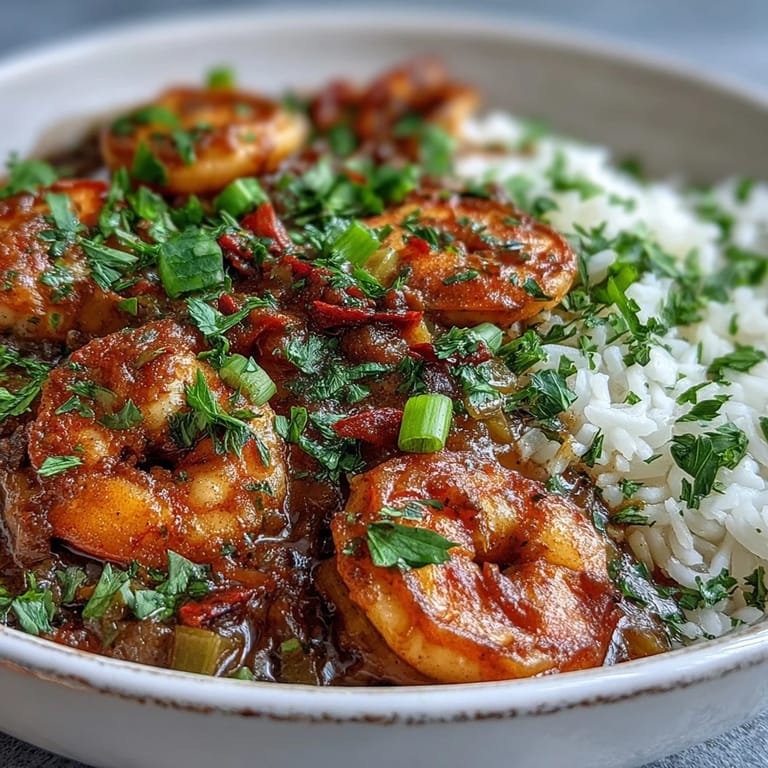
- Taste and adjust the salt and heat, fish out the bay leaf, then ladle the étouffée over mounds of hot rice. Scatter green onions and parsley on top, and serve it while it's still steaming.
 Pin It
 There was an evening last spring when I served this to friends who'd never tasted anything like it, their forks pausing mid-air as they processed the layers of flavor. One of them, a quiet guy who rarely commented on food, looked up and said it tasted like someone's grandmother had been cooking all day just for him. I didn't correct him to say it only took an hour, because in spirit, he was absolutely right.
What Makes a Roux Work
The roux is equal parts fat and flour, cooked together until the raw taste disappears and the color deepens, creating a base that thickens and flavors simultaneously. In Cajun cooking, the darker the roux, the more complex and nutty the flavor, though it loses some thickening power as it darkens. You're looking for a deep brown that reminds you of milk chocolate, stirred constantly so it colors evenly and never catches on the bottom. The moment it reaches that color, the vegetables go in to stop the cooking, a technique that feels like catching something mid-fall. Once you understand this rhythm, you'll never fear a roux again.
Choosing Your Protein
Shrimp is traditional and quick-cooking, but crawfish tails bring an even deeper Louisiana authenticity if you can find them fresh or frozen. I've also made this with chunks of chicken thigh, which turn meltingly tender in the long simmer, or spicy andouille sausage sliced into coins for a smokier, heartier version. For a vegetarian take, try mushrooms and okra, which absorb the sauce beautifully and add their own earthy sweetness. The technique stays the same no matter what you choose, so let your market and your mood guide you.
Storing and Reheating
Étouffée keeps in the fridge for up to three days and actually improves as the flavors meld, becoming rounder and more integrated. Reheat it gently on the stovetop with a splash of stock to loosen the sauce, stirring occasionally so nothing sticks. You can also freeze it for up to two months, though the shrimp may become slightly firmer after thawing. I like to freeze it in single portions so I can pull one out on a weeknight when I need something that tastes like I tried, even though past-me did all the work.
- Always cool the étouffée completely before refrigerating to prevent condensation from thinning the sauce.
- Freeze in airtight containers with a little headspace, because the liquid expands slightly as it freezes.
- Reheat only what you'll eat that day, because repeated heating and cooling degrades both flavor and texture.
 Pin It
 This dish will teach you to slow down, to trust your senses, and to find satisfaction in the kind of cooking that asks for your full attention. Serve it to people you want to feed well, and watch what happens when they take that first bite.
Recipe FAQs
- → What is a roux and why is it important for étouffée?
A roux is a mixture of flour and fat cooked together to thicken sauces and provide flavor. In étouffée, the roux is cooked until it reaches a deep chocolate color, which takes about 15-20 minutes of constant stirring. This dark roux provides the rich, nutty flavor and thick texture that is essential to authentic Cajun and Creole dishes.
- → Can I use crawfish instead of shrimp?
Absolutely! Crawfish are traditional in Louisiana étouffée and work wonderfully in this dish. You can substitute an equal amount of peeled crawfish tails for the shrimp. If using frozen crawfish, thaw them completely and drain well before adding to the sauce.
- → How spicy is this étouffée?
The heat level is adjustable based on your preference. The recipe includes Cajun seasoning and cayenne pepper, which provide a moderate kick. For a milder dish, reduce or omit the cayenne pepper. You can always add more heat later with hot sauce or additional Cajun seasoning.
- → Can I make this étouffée ahead of time?
Yes, étouffée actually tastes better the next day as the flavors have time to meld. You can make it up to 2 days in advance and store it in the refrigerator. Reheat gently over low heat, adding a splash of stock or water if the sauce has thickened too much.
- → What should I serve with étouffée?
Étouffée is traditionally served over fluffy white rice, which absorbs the rich sauce. You can also serve it with crusty French bread for dipping, a simple green salad with vinaigrette, or cornbread. For a complete Louisiana feast, pair it with gumbo or jambalaya.
- → How do I make this gluten-free?
To make étouffée gluten-free, substitute the all-purpose flour with a gluten-free flour blend or rice flour when making the roux. Ensure your seafood stock is certified gluten-free, and double-check that your Cajun seasoning doesn't contain any wheat-based additives.