 Pin It
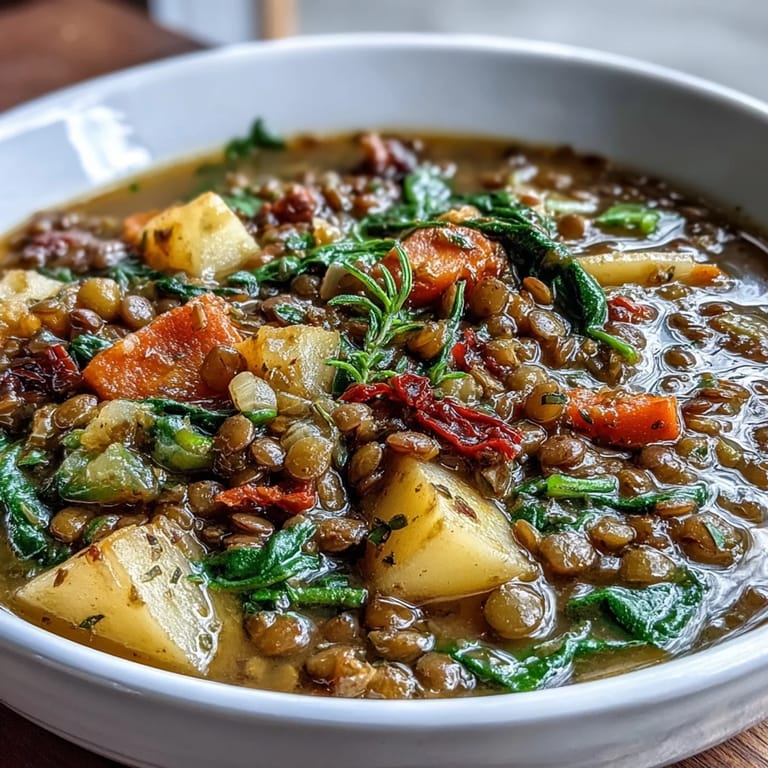
 My neighbor brought over a bowl of green lentil stew on a particularly gray Tuesday, and I was skeptical until the first spoonful hit my tongue. There's something about the way those little green lentils hold their shape while everything around them becomes tender and yielding that felt like discovering a secret. Since then, I've made this stew probably fifty times, each time remembering how she stood in my kitchen explaining that the earthiness of the lentils needs the brightness of lemon to really shine. It's become the meal I make when I want something that feels both simple and thoughtful.
I served this to my kids during a snowstorm when we were all stuck inside with cabin fever, and watching them ask for seconds without complaint felt like winning the lottery. That moment taught me that food doesn't need to be complicated to feel special, it just needs to arrive at the table with intention.
Ingredients
- Large onion, finely chopped: This is your flavor foundation, so don't rush the chopping, and let it soften properly in the oil before adding anything else.
- Garlic cloves, minced: Two cloves keeps it subtle, but if you're a garlic person like me, there's no harm in adding a third.
- Medium carrots, peeled and diced: The sweetness here balances the earthiness of the lentils, so don't skip them or rush their cooking.
- Medium potatoes, peeled and diced: Keep them roughly the same size as your carrot pieces so everything cooks evenly.
- Celery stalk, diced: This adds a subtle savory note that ties the whole thing together, even though you won't taste it explicitly.
- Baby spinach or little sprout greens, roughly chopped: This goes in at the very end to stay bright and tender, adding a final flourish of color.
- Dried green lentils, rinsed: Rinsing removes dust and surface starch, and it only takes thirty seconds under cold water.
- Vegetable broth: The quality matters here more than you'd think, so grab one you actually like the taste of.
- Water: This dilutes the broth just enough so the lentils can actually absorb flavor instead of being drowned in it.
- Olive oil: Two tablespoons is enough to gently soften your vegetables without making the stew greasy.
- Dried thyme and oregano: These dried herbs are crucial because they've concentrated their flavor, unlike fresh ones that would disappear.
- Bay leaf: Fish it out before serving unless you enjoy the surprise of biting into one, which I don't recommend.
- Ground cumin, optional: Add this only if you want to push the stew toward a slightly warmer, more exotic direction.
- Salt and black pepper: Taste as you go and season at the very end, when you can actually judge what the stew needs.
- Lemon juice, optional: That squeeze of brightness at the end can transform a good stew into something memorable.
Tired of Takeout? 🥡
Get 10 meals you can make faster than delivery arrives. Seriously.
One email. No spam. Unsubscribe anytime.
Instructions
- Build Your Flavor Base:
- Heat the olive oil over medium heat and add your chopped onion, garlic, and celery all at once. Let them sizzle gently for three to four minutes, stirring occasionally, until the onion becomes soft and translucent. You'll know you're there when the kitchen smells unmistakably of cooked garlic and onion.
- Add the Root Vegetables:
- Stir in your diced carrots and potatoes, then cook for about five minutes while stirring occasionally. You're not trying to cook them through yet, just get them acquainted with the hot pot and start releasing their natural sugars.
- Introduce the Lentils and Liquid:
- Pour in your rinsed green lentils followed by the vegetable broth and water. Add the thyme, oregano, bay leaf, cumin if you're using it, and a generous pinch of salt and pepper.
- Bring to a Simmer:
- Turn the heat up until you see big bubbles rolling across the surface, then immediately turn it back down to low and cover the pot. This transition from boil to simmer is where the magic happens, where everything stops fighting and starts cooperating.
- Let Time Do the Work:
- Set a timer for thirty to thirty five minutes and resist the urge to stir constantly. The lentils and vegetables will become tender without your intervention, and the flavors will deepen and marry together.
- Add Greens and Final Touches:
- Fish out the bay leaf carefully, then stir in your baby spinach or little sprout greens. Let them wilt for two to three minutes, then taste the stew and decide if it needs more salt, pepper, or that squeeze of lemon juice for brightness.
- Serve and Celebrate:
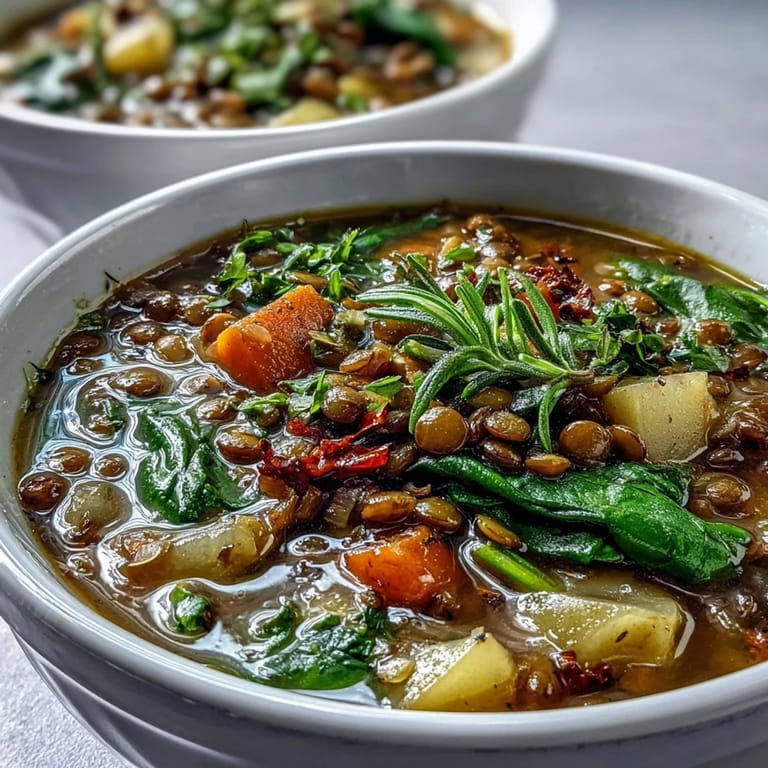
- Ladle the stew into bowls while it's still hot and steaming. If you have fresh herbs to scatter on top, do it now.
 Pin It
 There was an afternoon when my mother came over and tried this stew, and halfway through the bowl she set down her spoon and said, this tastes like you're taking care of yourself. That comment stuck with me, because that's exactly what this stew feels like to make and eat.
Why Green Lentils Are the Right Choice Here
Green lentils have a firmer structure than their red or brown cousins, which means they'll still have a little bite to them after forty minutes of simmering instead of turning to mush. They also taste more nutty and complex, adding depth to the stew rather than disappearing into it. When you bite into one, you're meant to know it's there.
The Importance of Taste and Adjust
Seasoning a stew is not something you do once at the beginning and then forget about. The flavors shift and concentrate as the liquid reduces, and what tasted balanced at the start can taste either under or over seasoned by the end. I always keep the salt shaker and pepper grinder nearby during those last few minutes of cooking, tasting frequently and adjusting until the stew tastes like exactly what I wanted to eat.
Ways to Make This Stew Your Own
This is one of those recipes that welcomes adaptation without falling apart. You can swap in sweet potatoes for regular ones if you want something sweeter, add a splash of balsamic vinegar for extra depth, or stir in a half teaspoon of smoked paprika if you want to push it toward something smokier and more dramatic. Some people serve it with crusty bread for scooping, others ladle it over rice to make it more filling.
- A splash of balsamic vinegar at the end adds a subtle sweetness and complexity that feels sophisticated without being obvious.
- If you have fresh herbs like parsley or cilantro, scatter them on top just before serving for a brightness that dried herbs can't quite achieve.
- Leftover stew keeps beautifully in the refrigerator for four or five days, and it often tastes even better the next day as flavors continue to develop.
 Pin It
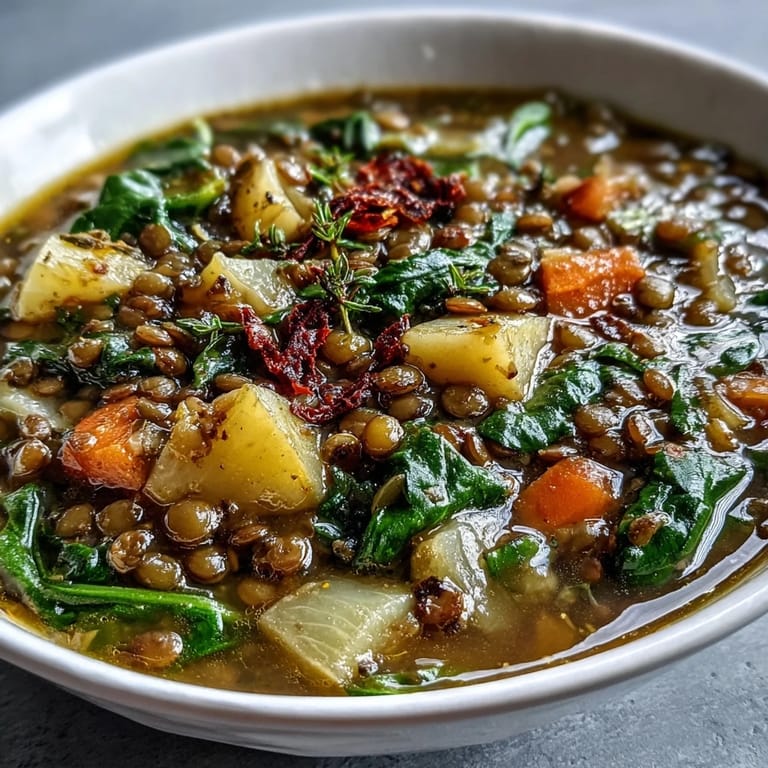
 This stew is proof that the most nourishing meals are often the simplest ones, made with vegetables and time and attention rather than obscure ingredients. Make it for yourself on a day when you need comfort, or make it for someone else when you want them to know you're thinking of them.
Recipe FAQs
- → What lentils are best for this stew?
Green lentils hold their shape well and provide a tender yet firm texture, making them ideal for this stew.
- → Can I use fresh herbs instead of dried?
Yes, fresh herbs can be used; add them toward the end to preserve their flavor and aroma.
- → How can I make the stew thicker?
Simmer uncovered for a few extra minutes or mash some lentils and potatoes gently to thicken the stew.
- → Is it possible to substitute potatoes?
Sweet potatoes can be used in place of regular potatoes for a slightly sweeter taste and different texture.
- → What side dishes pair well with this stew?
Crusty bread, cooked rice, or a simple green salad complement the stew beautifully.
- → Can I prepare this stew in advance?
Yes, flavors deepen when refrigerated overnight. Reheat gently before serving.