 Pin It
 One October afternoon, my neighbor stopped by with a basket of carrots from her garden, and I found myself suddenly inspired to make something warm and filling. That's when this creamy white bean soup came together—a dish that has since become my go-to when the weather turns and I want something that feels both elegant and deeply comforting. The bacon adds a savory richness, the rosemary brings an earthy sophistication, and somehow it all transforms into something far greater than the sum of its parts.
I made this for my book club on a November evening, and watching people's faces light up as they tasted it was genuinely moving. Someone asked if it was restaurant-quality, and I could barely contain my pride serving something I'd made myself. That night, the soup disappeared faster than the conversation, which says everything you need to know.
Ingredients
- Thick-cut bacon (150 g): Don't skimp here—thick-cut bacon has more meat and less of those papery edges that disappear into nothing, plus the fat it renders is pure liquid gold for your base.
- Yellow onion (1 medium): The foundation of everything good, finely chopped so it softens into sweet undertones that balance the smokiness.
- Carrots (2 medium) and celery (2 stalks): These create what the French call the holy trinity of flavor, diced small enough to disappear into the soup but substantial enough to matter.
- Garlic (3 cloves): Minced fine so it distributes evenly and doesn't leave behind harsh chunks.
- Cannellini or navy beans (2 cans): Always drain and rinse—it removes the starchy liquid that can make the soup gloopy and gives you more control over the texture.
- Chicken or vegetable broth (1 liter): Low-sodium is essential because you're controlling the salt yourself; store-bought salty broth will overwhelm everything else.
- Heavy cream (120 ml): This is what takes the soup from nice to velvety, added at the end to preserve its richness and prevent any curdling.
- Fresh rosemary (2 sprigs) and bay leaf: These infuse the broth with warmth and depth; fresh rosemary is worth hunting for because dried can taste dusty in comparison.
- Black pepper and salt: Freshly ground pepper makes a surprising difference, and you'll taste the difference the moment it hits the pot.
Tired of Takeout? 🥡
Get 10 meals you can make faster than delivery arrives. Seriously.
One email. No spam. Unsubscribe anytime.
Instructions
- Render the bacon until it's gloriously crisp:
- Cut your bacon into small dice and let it cook low and slow in a large pot over medium heat for about 5-7 minutes. You'll know it's ready when the pieces are golden-brown and the fat has truly rendered out—the kitchen will smell incredible. Set the bacon aside on paper towels, leaving behind about a tablespoon of that precious fat.
- Build your flavor base with the vegetables:
- Toss your diced onion, carrots, and celery into that bacon fat and let them sauté for 6-8 minutes, stirring occasionally until the vegetables soften and the onion turns translucent. This step is crucial—you're not rushing it, you're coaxing out sweetness and depth that will carry the whole soup.
- Wake everything up with garlic:
- Add your minced garlic and stir constantly for exactly one minute, just until the raw smell mellows and something fragrant replaces it. This is the moment the soup goes from ingredients to something intentional.
- Bring the soup to life with broth and beans:
- Pour in your drained beans and broth, add the rosemary sprigs and bay leaf, then season with black pepper and a pinch of salt. Bring the whole thing to a rolling boil, then reduce the heat and let it simmer uncovered for 20 minutes so the flavors have time to marry.
- Blend until it's creamy and luxurious:
- Fish out the rosemary sprigs and bay leaf, then use an immersion blender to puree the soup until it reaches that silky, velvety texture—some people like it completely smooth, others prefer a few soft chunks remaining, so blend to your preference. If you're using a standard blender instead, work in batches and be careful with the heat.
- Finish with cream and bacon:
- Stir in your heavy cream and most of the reserved bacon (save some crispy bits for garnish), then let everything simmer together for 5 more minutes so the flavors settle. Taste it now and adjust your salt and pepper—this is your moment to make it exactly right.
- Serve with reverence and garnish:
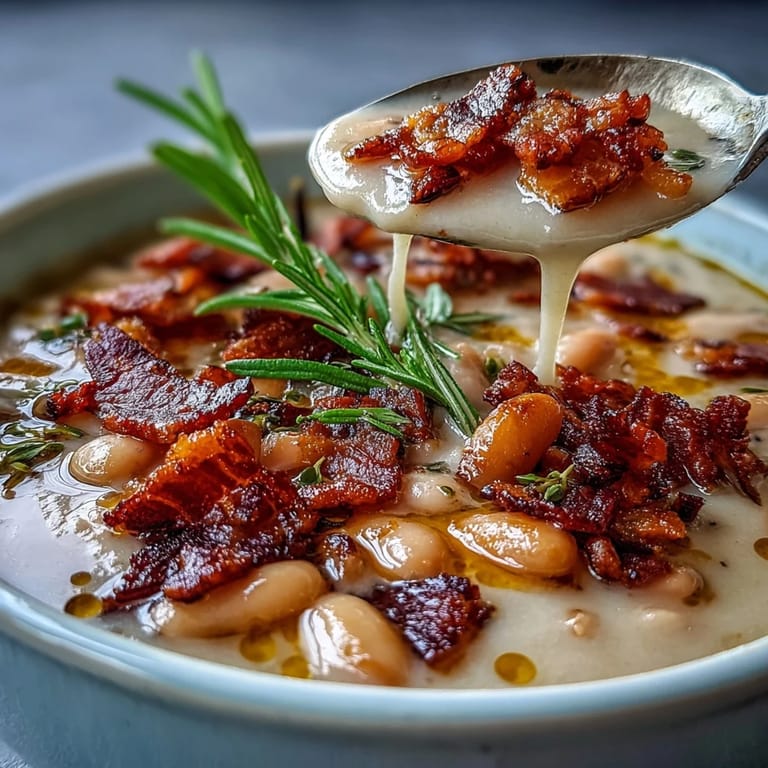
- Ladle into bowls and top with that reserved bacon you kept back, a drizzle of olive oil, and some fresh parsley if you have it. This is the moment where good soup becomes something people remember.
 Pin It
 There was a moment during that book club night when someone asked for the recipe, and I realized this soup had crossed from being something I made to something people actually wanted in their own homes. It's a funny feeling, seeing your own creation gain that kind of quiet importance in someone else's kitchen.
The Magic of Bacon Fat
I used to think bacon fat was just a byproduct, something to drain away. Then I learned that leaving behind just a tablespoon or so creates a foundation that no amount of butter could replicate—it adds a savory depth that makes people pause mid-spoonful and try to figure out what makes this soup taste the way it does. The fat distributes the flavor of everything that comes after it, making each ingredient sing rather than compete.
Texture Matters More Than You'd Think
I blended this soup too far once and ended up with something that felt almost too smooth, almost industrial. The second time, I stopped partway through and left some chunks of beans and vegetables visible, and suddenly it felt rustic and intentional instead of over-processed. There's something about a little texture that makes the soup feel more real, more like someone cared enough to not obliterate everything into submission.
Variations That Work
This soup is forgiving enough to adapt without losing its soul. I've made it for vegetarian friends by swapping out the bacon for a teaspoon of smoked paprika stirred into the cream, and honestly, it's delicious in a completely different way. The structure is strong enough to support different beans, different herbs, even a splash of white wine if you want to add that kind of sophistication.
- For a lighter version, use half-and-half instead of heavy cream, or even whole milk if you're watching calories.
- A squeeze of fresh lemon juice right at the end brightens everything without making it taste acidic.
- If you have fresh thyme on hand, it plays beautifully alongside the rosemary and adds another layer of herbaceous warmth.
 Pin It
 This soup has become the kind of recipe I return to again and again, not because it's complicated, but because it delivers comfort so reliably. There's something deeply satisfying about a bowl of something warm that tastes like you know what you're doing in the kitchen.
Recipe FAQs
- → What beans work best for this soup?
Cannellini or navy beans provide a creamy texture and mild flavor ideal for this soup, but great northern beans can be used as a substitute.
- → How can I make it vegetarian?
Omit the bacon and use vegetable broth instead. Adding a pinch of smoked paprika can add depth and a smoky touch.
- → What is the purpose of rosemary in the soup?
Rosemary adds a fragrant, herbaceous flavor that complements the smoky bacon and creamy beans, enhancing the overall aroma.
- → Can I prepare this soup ahead of time?
Yes, this soup stores well in the refrigerator for up to 3 days and reheats gently on the stove or in a microwave.
- → How do I achieve the creamy texture?
Pureeing the cooked beans and vegetables using an immersion blender or regular blender creates the smooth, velvety consistency.
- → Is it possible to make this soup gluten-free?
Yes, as long as the broth and bacon labels confirm gluten-free ingredients, the soup remains suitable for a gluten-free diet.