 Pin It
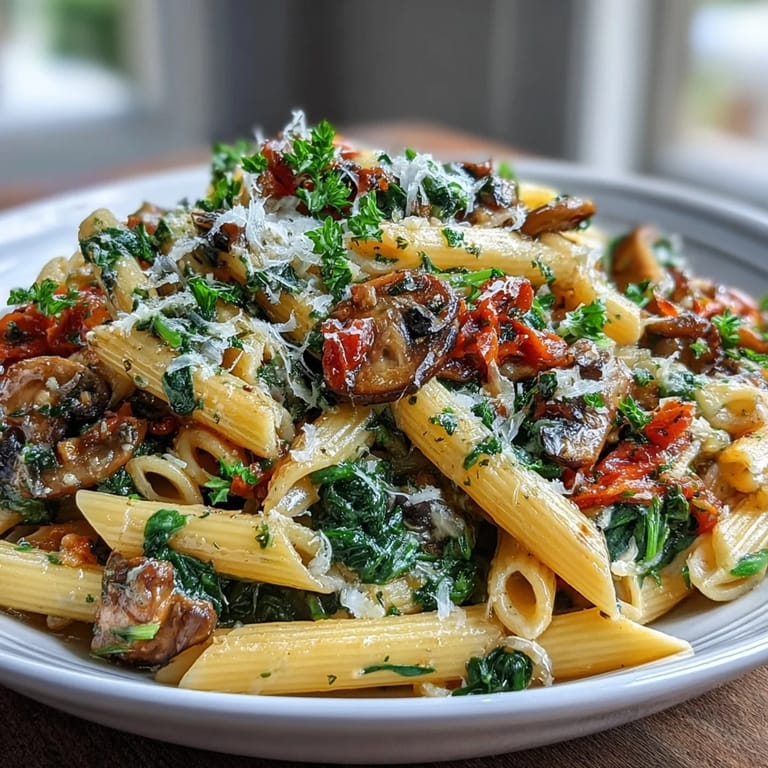
 There's something deeply satisfying about watching a single pot transform into dinner without dirtying half your kitchen. I discovered this approach during a particularly hectic Tuesday when my usual multi-pan setup felt like overkill, and honestly, it changed how I think about weeknight cooking. The magic happens when you let everything simmer together—pasta, vegetables, and broth mingling until the starch from the pasta thickens everything into something rich and cohesive. No fancy technique required, just patience and a wooden spoon.
I made this for my roommate who was between jobs and eating cereal for dinner more often than I liked to see. When she came home to the smell of garlic and tomatoes simmering away, something shifted—it wasn't just food, it was proof that someone was thinking of her. She's still surprised it only takes 30 minutes from bare pot to steaming bowl.
Ingredients
- Dried penne or fusilli: 350 g—choose whichever shape you have because the shape doesn't matter nearly as much as the fact that you're making dinner.
- Medium onion: 1, finely chopped—this is your aromatic foundation, so don't rush it.
- Garlic cloves: 2, minced—use fresh and let it smell up your kitchen a little.
- Medium zucchini: 1, diced—this adds body without pretension, and it softens beautifully into the sauce.
- Red bell pepper: 1, diced—the sweetness balances the acidity of the tomatoes perfectly.
- Canned diced tomatoes: 400 g with their juices—never drain them; those liquids are flavor you paid for.
- Baby spinach: 100 g—it wilts down to almost nothing, which means you can feel like you're eating greens.
- Vegetable broth: 700 ml—this is what makes the whole thing work; it becomes your sauce as the pasta cooks.
- Grated Parmesan cheese: 60 g plus extra—the umami moment that makes people ask for your recipe.
- Olive oil: 2 tbsp—a generous glug is all you need to get everything started.
- Dried Italian herbs: 1 tsp—adjust if your herbs are old; old herbs are like promises kept too long.
- Chili flakes: ½ tsp optional—adds a whisper of heat that nobody expects.
- Salt and black pepper: to taste—taste as you go because every stove is different.
Tired of Takeout? 🥡
Get 10 meals you can make faster than delivery arrives. Seriously.
One email. No spam. Unsubscribe anytime.
Instructions
- Start with the aromatics:
- Heat your olive oil in a large pot over medium heat and add the chopped onion and minced garlic. You'll know it's right when the kitchen starts smelling alive and the onion pieces turn soft and see-through, usually around 2 to 3 minutes.
- Add the vegetables:
- Stir in your diced zucchini and bell pepper, letting them soften for a couple of minutes while they release their own flavors into the oil. This quick sauté wakes them up before the liquid arrives.
- Build the one-pot magic:
- Pour in your uncooked pasta directly into the pot along with the canned tomatoes (juice and all) and your vegetable broth. Season generously with Italian herbs, chili flakes if you're feeling it, salt, and pepper, then stir everything together until the pasta is mostly submerged.
- Let it simmer:
- Bring the whole thing to a boil, then lower the heat and cover it. Let it bubble away for 10 to 12 minutes, stirring occasionally so nothing sticks to the bottom, until the pasta is tender and the liquid has mostly been absorbed into something that looks almost like sauce.
- Finish with life:
- Uncover the pot, scatter in your baby spinach, and sprinkle the Parmesan over everything. Stir gently for about a minute until the spinach has surrendered and the cheese has melted into the warm pasta.
- Taste and adjust:
- Give it a taste and add more salt, pepper, or herbs if it needs them. Some days your tomatoes are brighter than others, so trust your mouth.
 Pin It
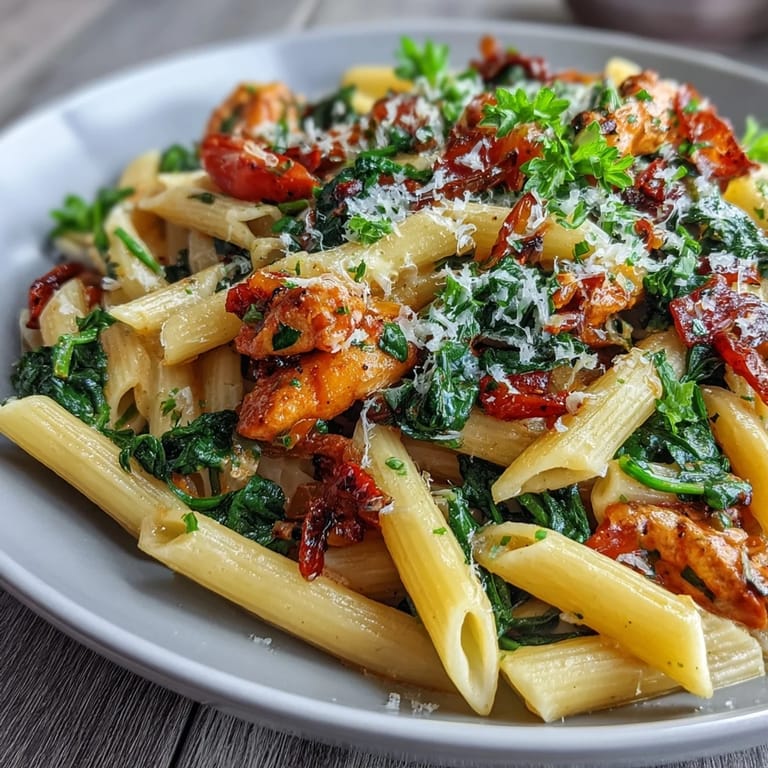
 My neighbor watched me plate this up one evening and asked if I'd made it from scratch with homemade sauce—when I explained it was really just pasta and broth cooking together, her face was genuinely shocked. That's when I realized that sometimes the simplest techniques feel like secrets nobody bothered to share.
Why This Method Actually Works
Traditional pasta cooking and sauce-making are separate acts that later get married on a plate. Here, you're skipping the divorce settlement entirely by letting them get to know each other from the start. The pasta releases starch into the broth, thickening it naturally, while the vegetables soften and surrender their flavors to everything around them. By the time it's done, there's no dividing line between pasta and sauce—it's one unified thing.
The Budget Part Isn't Sad
Every ingredient here is chosen because it does real work, not because it's cheap. Canned tomatoes are often better than fresh ones out of season, and they cost less than guilt about wasting money on mediocre produce. Zucchini and bell peppers are usually the most forgiving vegetables in a grocery store, still holding up even when they're past their flashy best. The spinach adds nutrition without drama, and a quarter block of Parmesan goes so far you'll wonder why you ever felt poor.
How to Make It Yours
The framework here is strong enough to handle whatever your kitchen has to offer. Some people swear by adding a can of white beans for protein, others brown Italian sausage first or fold in shredded rotisserie chicken at the end. Mushrooms work beautifully if your bell pepper situation is dire, peas hide in there without complaint, and carrots can replace the zucchini if that's all you've got. The broth to pasta ratio stays the same, so everything still comes together the same way.
- Taste it as it cooks, not just at the end—pasta absorbs salt differently depending on the day.
- If it looks too watery at the halfway point, you can uncover it early; if it looks too thick, add a splash more broth.
- Leftovers reheat better with a little extra broth stirred in, so don't panic if it seems thick when it cools.
 Pin It
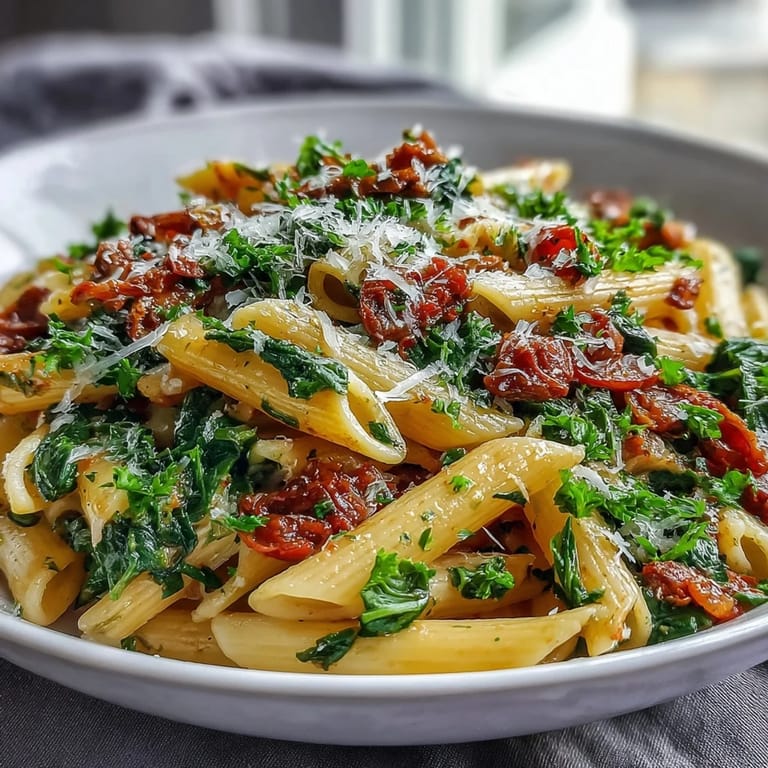
 This is the kind of recipe that becomes part of your rotation not because it's fancy, but because it never lets you down. Make it enough times and you'll stop reading the instructions.
Recipe FAQs
- → Can I use other pasta types for this dish?
Yes, penne or fusilli are suggested, but you can substitute with your preferred pasta shapes such as rigatoni or farfalle for similar cooking results.
- → How can I make this dish gluten-free?
Simply replace the dried pasta with a gluten-free variety while keeping the rest of the ingredients the same.
- → What protein options pair well with this pasta?
Adding cooked sausage, shredded rotisserie chicken, or canned beans can boost protein and add extra texture and flavor.
- → Is it possible to prepare this dish vegan?
Omitting the Parmesan cheese or substituting it with a vegan alternative will make this dish suitable for a vegan diet.
- → How do I know when the pasta is perfectly cooked?
Cook covered on simmer for 10–12 minutes, stirring occasionally, until the pasta is tender but still firm to the bite (al dente) and the liquid is mostly absorbed.