 Pin It
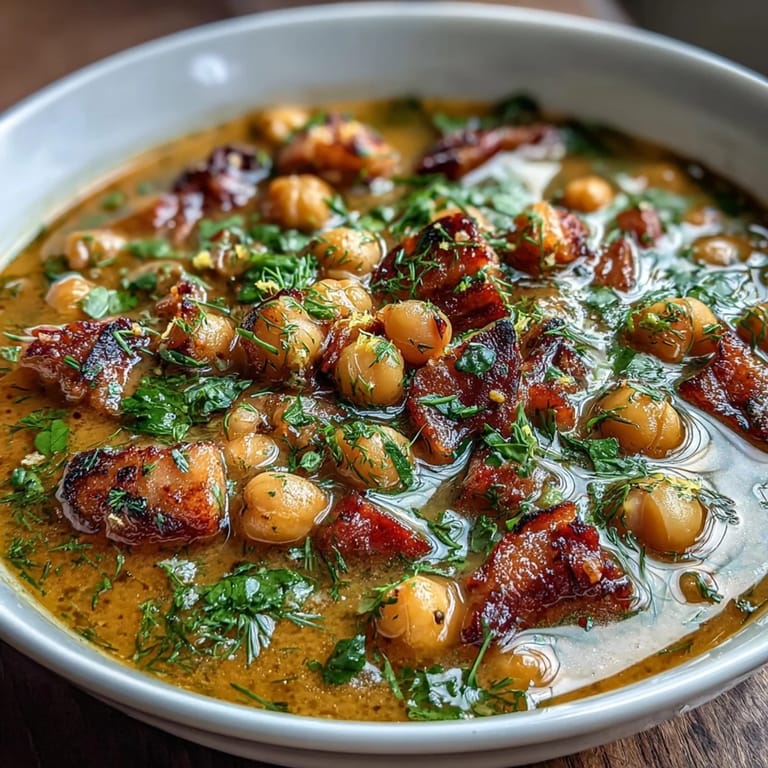
 There's something about a pot of soup that turns an ordinary Tuesday into something worth slowing down for. This ham and chickpea soup landed in my kitchen on a whim—I had leftover ham from the weekend, a can of chickpeas gathering dust, and a lemon that smelled like pure sunshine. Twenty minutes later, my whole apartment smelled like dill and broth, and I realized I'd stumbled onto something that tastes far more intentional than it actually is. It's the kind of soup that makes people ask for the recipe, then seem surprised when you tell them how simple it really was.
I made this for my neighbor one evening when she mentioned not having the energy to cook, and watching her face light up when she tasted that first spoonful was genuinely worth the effort. She came back the next week specifically asking if I'd make it again. Now I always keep the ingredients on hand because there's something about feeding someone a warm, nourishing bowl that reminds you why you started cooking in the first place.
Ingredients
- Cooked ham, 250 g (about 9 oz), diced: Quality matters here—look for ham that's been minimally processed if you can, because it'll make the broth taste deeper and more complex.
- Chickpeas, 1 can (400 g/14 oz), drained and rinsed: Rinsing them thoroughly removes the starchy liquid and keeps your broth from getting cloudy.
- Onion, 1 medium, finely chopped: This is your foundation—the smaller you chop it, the more it'll disappear into the soup and build flavor.
- Carrots, 2 medium, diced: They soften into sweetness that balances the saltiness of the ham beautifully.
- Celery stalks, 2, diced: Don't skip this; it's what gives the soup that classic, comforting depth.
- Garlic cloves, 2, minced: Fresh garlic is essential—jarred versions won't give you that aromatic punch.
- Low-sodium chicken or vegetable broth, 1.2 liters (5 cups): Low-sodium lets you control the salt and prevents the soup from tasting harsh.
- Olive oil, 2 tbsp: This is your sauté base, so use something you actually enjoy the taste of.
- Lemon juice and zest, from 1 lemon: This is where the magic happens—the zest adds complexity, the juice adds brightness at the very end.
- Fresh dill, 2 tbsp, finely chopped: Fresh herbs make all the difference; dried dill tastes like hay by comparison.
- Bay leaf, 1: It simmers in the background, adding a subtle earthiness you won't even notice but would definitely miss.
- Dried thyme, 1/2 tsp: A gentle herb that plays nicely with everything else without being loud.
- Salt and freshly ground black pepper, to taste: Always taste at the end; seasoning is personal.
Tired of Takeout? 🥡
Get 10 meals you can make faster than delivery arrives. Seriously.
One email. No spam. Unsubscribe anytime.
Instructions
- Build your flavor base:
- Heat the olive oil in a large soup pot over medium heat, then add the onion, carrots, and celery. Let them cook for 5 to 6 minutes, stirring occasionally, until they're soft and starting to turn translucent. You'll know they're ready when the whole kitchen smells like a warm, vegetable-forward hug.
- Wake up the aromatics:
- Stir in the minced garlic and let it cook for about a minute—you want it fragrant, not brown. This is a quick step, but it's crucial because it distributes that garlicky flavor throughout the soup.
- Introduce the ham:
- Add the diced ham and stir it around for 2 to 3 minutes, letting it warm through and release its savory essence into the oil. The ham will start to caramelize slightly at the edges, which is exactly what you want.
- Build the broth:
- Pour in the low-sodium broth and add the drained chickpeas, bay leaf, and thyme. Bring everything to a boil, then immediately reduce the heat and let it simmer gently for 20 minutes. This isn't a rush—the quiet simmer is when all the flavors start getting to know each other.
- Brighten the finish:
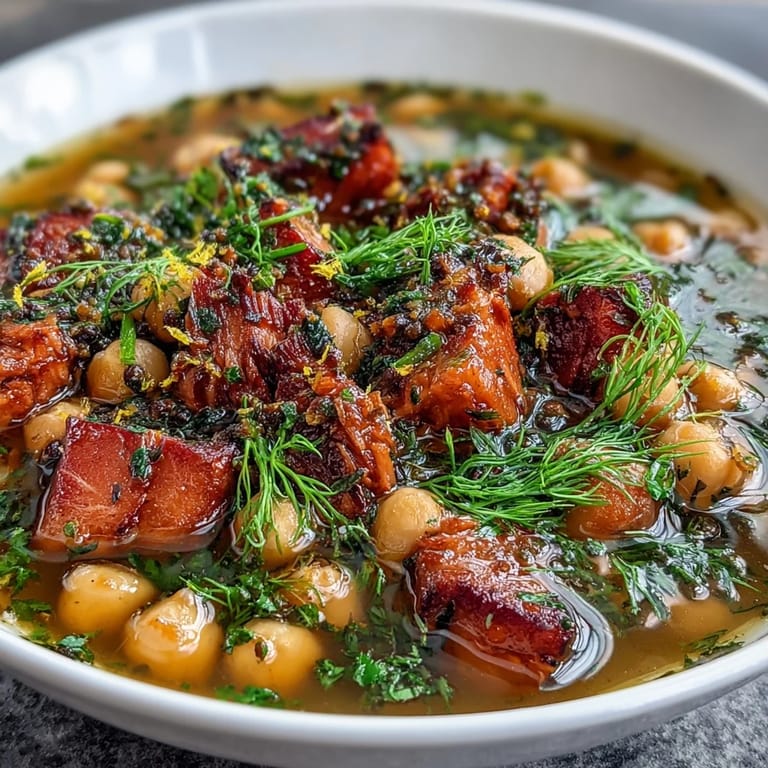
- Remove the bay leaf and stir in the lemon juice, lemon zest, and fresh dill. The soup will suddenly smell alive and vibrant, and that's your cue that you're close to done. Simmer for just 2 to 3 more minutes to let those flavors meld, then taste and adjust the salt and pepper.
- Serve with intention:
- Ladle the soup into bowls, garnish with a small handful of extra fresh dill, and serve while it's still steaming hot. There's something about a hot bowl in cold hands that makes everything feel right.
 Pin It
 There was an evening when I made this soup and my eight-year-old actually asked for a second bowl without being asked. He said it tasted like "good soup," which is kid-speak for "mom got it right," and I'll take that any day of the week. That's when I knew this recipe had crossed from practical into something that matters.
Customizing Your Soup
This soup is forgiving and friendly to improvisation. If you find yourself with smoked turkey instead of ham, it works beautifully and adds a slightly different depth. For a vegetarian version, simply omit the ham entirely and use vegetable broth—you won't miss it because the chickpeas and herbs carry enough flavor on their own. Some evenings I've added a handful of spinach at the very end, and it's a quiet, lovely addition that adds color and nutrition without changing the character of the soup.
Pairing and Serving Suggestions
This soup sings when you serve it alongside something with texture—a thick slice of crusty bread, toasted if you're feeling fancy, will soak up the broth in all the right ways. If you want to pour a glass of wine, a crisp Sauvignon Blanc or even a lighter Pinot Grigio will echo those citrus notes and make the whole meal feel more intentional than a weeknight soup probably should.
Storage and Make-Ahead Magic
This soup actually tastes better the next day, when all the flavors have had time to settle and deepen. Store it in an airtight container in the refrigerator for up to four days, or freeze it in portions for up to three months—just remember that the dill is brightest when it's fresh, so consider holding back a bit to stir in after reheating.
- If the soup thickens too much when stored, a splash of broth or water will bring it back to the right consistency.
- For a heartier version, mash about a quarter of the chickpeas with a fork before adding the broth to make the soup naturally thicker and creamier.
- Taste and re-season after reheating, because flavors can shift subtly once things cool down.
 Pin It
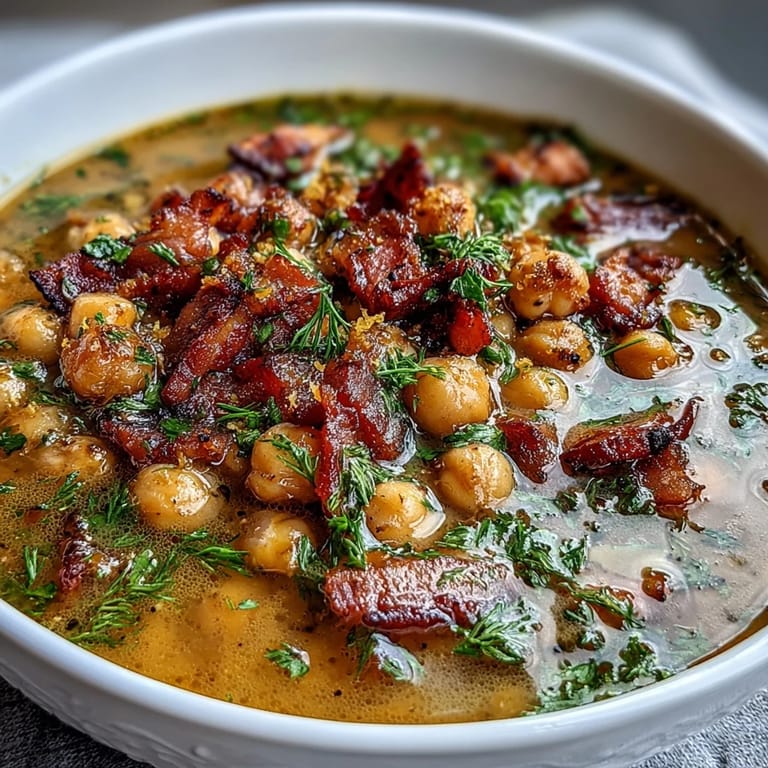
 This is the kind of soup that turns a simple evening into something nourishing, both for your body and your mood. Make it once, and you'll find yourself reaching for it again whenever you need something that tastes like care.
Recipe FAQs
- → Can I substitute smoked turkey for ham?
Yes, smoked turkey works well as a leaner alternative, providing a similar smoky flavor.
- → How can I thicken the soup?
Mash a portion of the chickpeas before adding to create a creamier texture without cream.
- → Is this soup suitable for a dairy-free diet?
Yes, it contains no dairy ingredients, making it suitable for dairy-free preferences.
- → What herbs complement the ham and chickpeas?
Fresh dill and thyme are key here, adding aromatic and fresh herbal notes to the broth.
- → Can I use vegetable broth instead of chicken broth?
Absolutely, vegetable broth is a good option for a lighter or vegetarian-friendly version.
- → What side dishes pair well with this soup?
Crusty bread and a crisp white wine, such as Sauvignon Blanc, complement the flavors nicely.