 Pin It
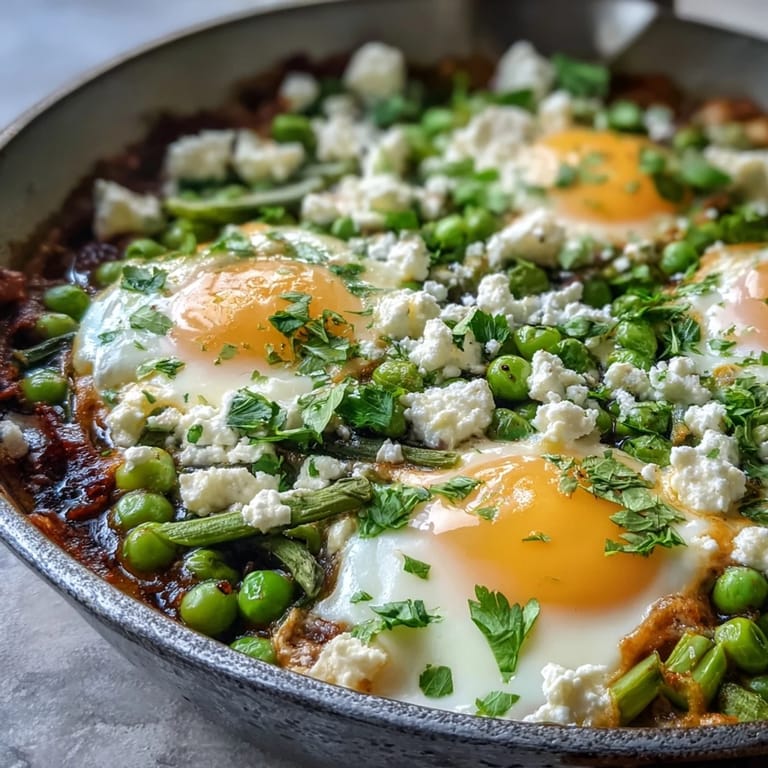
 There's something about spring that makes me want to crack eggs into a bubbling pan of vegetables and call it dinner. Last April, I was standing at the farmers market with a bag of fresh broad beans and the first tender asparagus of the season, when a friend mentioned she'd been craving shakshuka but wanted something lighter, greener. That afternoon, I threw together this pea and broad bean version, and it hit differently—the sweetness of the peas against the earthiness of the spices, all held together by runny egg yolks. It became the kind of dish you make when you want to feel like you're cooking with intention, not just following orders.
I made this for four of us on a Sunday afternoon when nobody wanted anything heavy but everyone was tired of salad. My partner stood at the stove with me while I was fiddling with the heat level, worried the eggs would cook too fast, and he just said, 'Stop overthinking it—you're making breakfast for dinner, not performing surgery.' That simple observation stuck with me, and honestly, it made the whole thing taste better because I stopped being so precious about it. Now whenever I make this, I think of that moment and just trust the process.
Ingredients
- Fresh or frozen peas (1 cup): Sweet and quick to cook, they add a gentle flavor that balances the spices without overpowering anything else in the pan.
- Fresh or frozen broad beans (1 cup, double-podded if fresh): These have an almost creamy texture when cooked gently, and they're worth seeking out because they genuinely taste different from regular beans.
- Asparagus (1 bunch, about 200g, trimmed and cut into 2-inch pieces): The secret to keeping asparagus from turning mushy is cutting it into pieces and adding it partway through cooking rather than at the start.
- Medium onion (1, finely chopped): This is your flavor foundation, so don't rush the chopping—it matters more than you'd think.
- Red bell pepper (1, diced): It adds sweetness and visual brightness without adding heat, which keeps the dish approachable.
- Garlic cloves (2, minced): Fresh garlic makes a real difference here; jarred garlic won't give you the same fragrant moment when you add the spices.
- Canned chopped tomatoes (1 can, 400g): Good quality matters here because the tomatoes become the soul of your sauce, so pick a brand you actually like eating straight from a spoon.
- Tomato paste (2 tablespoons): This concentrates the tomato flavor and helps the sauce thicken slightly without needing flour or any other tricks.
- Ground cumin (1 teaspoon): Warm and slightly nutty, it's the spice that makes people ask what you're cooking.
- Smoked paprika (1 teaspoon): This gives depth and a subtle smokiness that makes the dish feel more intentional than basic paprika ever could.
- Ground coriander (½ teaspoon): Citrusy and gentle, it works quietly in the background to tie everything together.
- Chili flakes (¼ teaspoon, optional): Add these only if you like heat; the dish is perfectly good without them if you prefer milder flavors.
- Salt and black pepper: Season as you go rather than all at once, tasting between additions so you don't oversalt.
- Large eggs (4): Room temperature eggs cook more gently and evenly than cold ones straight from the fridge, so take them out while you're prepping.
- Crumbled feta cheese (3 tablespoons): The salty tanginess cuts through the richness of the egg yolks in the best possible way.
- Fresh parsley or mint (2 tablespoons, chopped): Mint feels more spring-like to me, but parsley is equally good if that's what you have on hand.
- Extra virgin olive oil: Use decent olive oil here because you're drizzling it at the end where it actually matters for flavor.
Tired of Takeout? 🥡
Get 10 meals you can make faster than delivery arrives. Seriously.
One email. No spam. Unsubscribe anytime.
Instructions
- Blanch the spring vegetables:
- Bring a pot of salted water to a rolling boil and gently drop in the peas and broad beans for exactly 2 minutes—you want them to stay bright and just barely tender. Transfer them immediately to an ice bath to stop the cooking, then drain and set aside on paper towels.
- Build your sauce base:
- Heat olive oil in a large, deep skillet over medium heat until you can smell it warming, then add your chopped onion and red bell pepper. Let them soften for about 5 minutes, stirring occasionally, until the onion turns translucent and the pepper softens at the edges.
- Toast the spices:
- Stir in your minced garlic, cumin, smoked paprika, coriander, and chili flakes if using, and cook for just 1 minute until the whole kitchen smells like something worth waking up for. Don't let the garlic brown or the spices will taste bitter.
- Create the tomato base:
- Add the tomato paste first and stir it into the spiced mixture for about 30 seconds so it caramelizes slightly, then pour in your canned tomatoes with their liquid. Let this simmer gently for 10 minutes, stirring occasionally, until it thickens just enough to coat the back of a spoon.
- Add the vegetables and season:
- Stir in your blanched peas, broad beans, and asparagus pieces, then taste and adjust your salt and pepper as needed. Simmer for 5 to 7 minutes until the asparagus is tender but not soft.
- Nestle in the eggs:
- Using the back of a spoon, make four small wells in the vegetable mixture, spacing them evenly around the pan. Crack one egg into each well, cover the pan with a lid or foil, and turn the heat down to low.
- Cook the eggs gently:
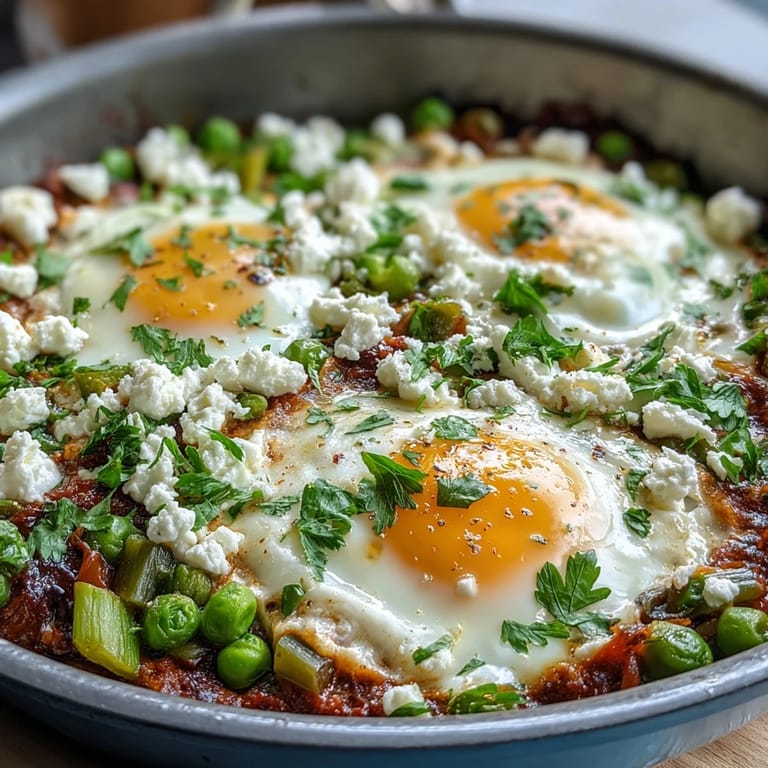
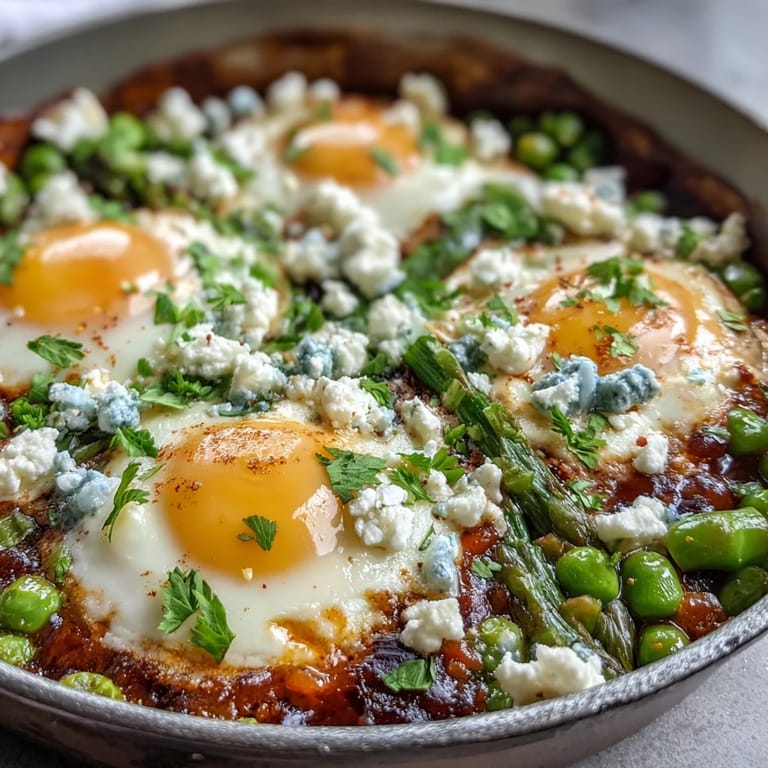
- Let the eggs cook undisturbed for 7 to 10 minutes, depending on how runny you like your yolks—I peek after 7 minutes and give it another minute or two if the whites still look translucent. The eggs are done when the whites are set but the yolks jiggle slightly when you gently shake the pan.
- Finish and serve:
- Remove from heat, scatter your crumbled feta and chopped herbs across the top, and drizzle generously with good olive oil. Serve directly from the pan at the table with crusty bread or flatbreads so everyone can soak up the sauce.
 Pin It
 There was a moment last month when my nephew took his first bite, yolk running all over his plate, and he looked genuinely surprised that something so simple could taste so complete. He asked if I'd made it at a restaurant first and then recreated it at home, which somehow felt like the highest compliment. That's when I realized this dish had become one of those things I make when I want to show someone I care through food, not because it's fancy, but because it's honest.
Why Spring Vegetables Matter Here
Using fresh peas and broad beans isn't just a seasonal thing—it genuinely changes the character of the dish. When I've made this with frozen vegetables (which absolutely works and tastes good), it's still delicious but misses that bright, almost grassy quality you get from spring produce. There's a reason people get excited about farmers markets in April and May, and it's partly because peas taste like the season changing. If you're making this outside of spring, frozen is your friend and won't disappoint, but if you can get fresh, it's worth the extra effort and cost.
Adapting for Your Dietary Needs
The beauty of shakshuka is that it's inherently flexible, and this version especially so because the vegetables are already doing the heavy lifting. For vegan versions, skip the eggs and feta, then stir in a can of chickpeas for protein and substance—I've done this and genuinely couldn't miss the eggs. If you want to make it gluten-free, the recipe already is, you just need to serve it with gluten-free bread or simply skip bread altogether and treat it as a vegetable bowl.
The Small Details That Actually Matter
I've learned that cooking this dish well isn't about doing anything complicated—it's about noticing the small moments where timing shifts the outcome. The smell of cumin and paprika hitting warm oil, the sound of the first vegetables hitting the pan, the way you know the sauce is ready when it coats a spoon instead of running off it immediately. These aren't fussy details, they're just paying attention to what your senses are telling you.
- Taste your sauce before adding eggs because it's much easier to adjust seasoning at this point than after everything is cooked together.
- If your eggs are cooking too fast and the whites are setting before the yolks stay runny, lower the heat even more or move the pan to a cooler part of the stove.
- Serve this directly from the pan and eat it while it's still warm, because the feta gets harder and less interesting as it cools.
 Pin It
 This is the kind of recipe that works as breakfast, lunch, or dinner depending on your mood and what you have planned next. Make it when you want something that feels nourishing without being heavy, or when you want to cook for people in a way that feels personal and unhurried.
Recipe FAQs
- → Can I use frozen vegetables instead of fresh?
Yes, frozen peas and broad beans work perfectly. No need to thaw them first—just blanch directly from frozen and add an extra minute to the cooking time if needed.
- → How do I know when the eggs are perfectly cooked?
The whites should be fully set and opaque while the yolks remain soft and runny. This typically takes 7-10 minutes with the lid on. For firmer yolks, cook an additional 2-3 minutes.
- → What can I substitute for feta cheese?
Goat cheese, ricotta salata, or even crumbled halloumi work well. For a vegan version, omit the cheese entirely or use a plant-based alternative and skip the eggs, adding chickpeas instead.
- → Can I prepare this dish ahead of time?
You can prepare the vegetable and tomato base up to 2 days ahead and refrigerate. When ready to serve, reheat the mixture and add the eggs fresh, cooking until just set.
- → What's the best bread to serve with shakshuka?
Crusty sourdough, warm pita, or flatbreads are ideal for scooping up the sauce and vegetables. For gluten-free options, choose certified gluten-free bread or serve with rice.
- → How can I make this spicier?
Increase the chili flakes to ½ teaspoon in the base, and serve with harissa or chili oil on the side. Fresh jalapeños or serrano peppers sautéed with the onions also add excellent heat.