 Pin It
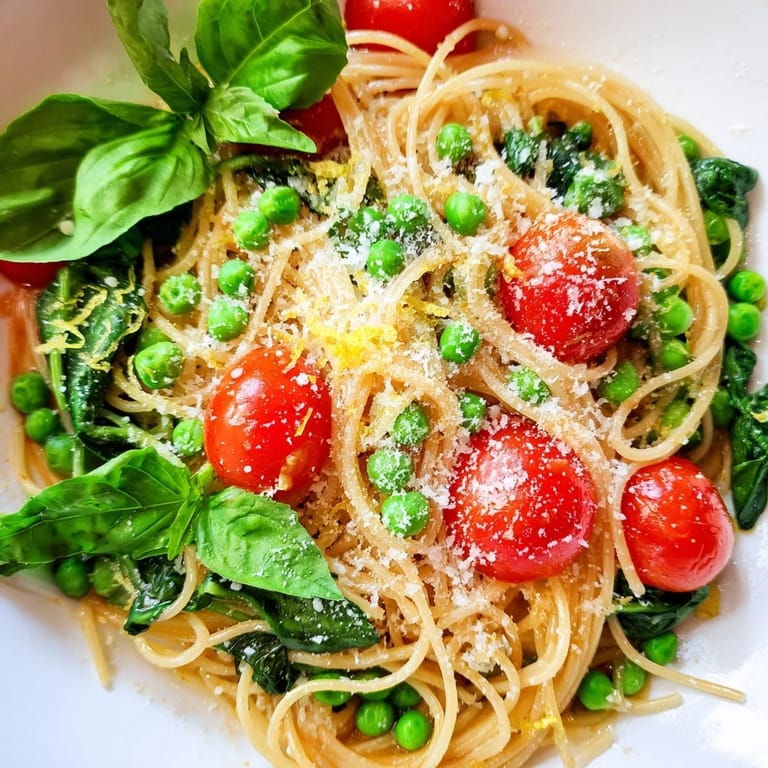
 Last spring, I found myself drowning in farmers market hauls those beautiful pea pods and cherry tomatoes that seemed to multiply in my crisper drawer. This one-pot method was born from pure kitchen laziness, honestly. Instead of blanching veggies separately and waiting for a giant pot of water to boil, I threw everything into one vessel and crossed my fingers. The result was this incredibly silky, emulsified pasta sauce that happens when starch meets broth right in the cooking liquid.
My sister was visiting last month when I made this for the first time, and she literally stood over the stove watching the liquid reduce. She kept asking if it was actually going to work, skeptically eyeing the unboiled spaghetti submerged in broth. When I finally stirred in that lemon zest and Parmesan at the end, the aroma hit us both simultaneously. We ended up eating straight from the pot with wooden spoons, standing in the kitchen, refusing to admit how hungry wed been.
Ingredients
- 350 g (12 oz) dried spaghetti: Traditional spaghetti works beautifully here, but the shape matters less than you might think any long pasta will cook evenly in the broth
- 150 g (1 cup) frozen or fresh peas: Frozen peas actually shine in this dish since they thaw and release sweetness directly into the cooking liquid
- 100 g (3.5 oz) baby spinach: Add this toward the end so it wilts gently rather than disintegrating completely
- 200 g (7 oz) cherry tomatoes, halved: Halving them helps release their juices into the sauce, creating little pockets of concentrated flavor throughout the pasta
- 2 cloves garlic, thinly sliced: Thin slices will mellow out as they cook, rather than burning like minced garlic might
- 1 small red onion, thinly sliced: Red onion brings a subtle sweetness that balances the fresh vegetables perfectly
- 1 L (4 cups) vegetable broth: Use a good quality broth you enjoy drinking on its own since it reduces down and becomes the primary flavor base
- 2 tbsp olive oil: This coats the pasta strands and helps prevent sticking while adding richness
- 1/2 tsp salt: Adjust based on how salty your vegetable broth already is
- 1/4 tsp black pepper: Freshly ground will give you the most aromatic result
- 1/4 tsp red pepper flakes (optional): Just a whisper of heat to wake up all those fresh spring flavors
- Zest of 1 lemon: This bright finishing touch makes everything taste alive and vibrant
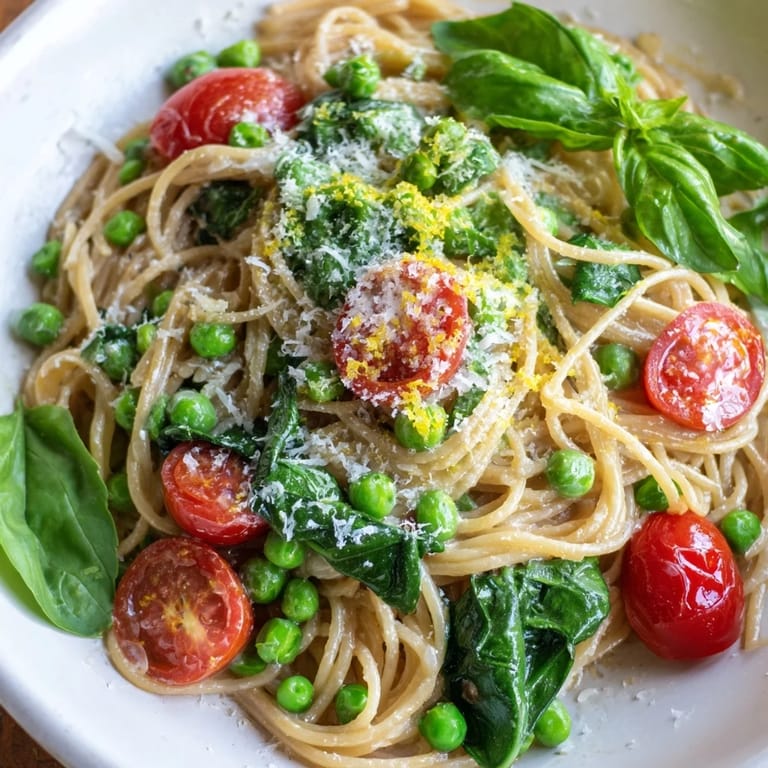
- 30 g (1/4 cup) grated Parmesan cheese: Vegetarian alternatives work wonderfully if that is a concern for you
- Fresh basil leaves: Tear these by hand right before serving for the most aromatic finish possible
Tired of Takeout? 🥡
Get 10 meals you can make faster than delivery arrives. Seriously.
One email. No spam. Unsubscribe anytime.
Instructions
- Build your flavor foundation:
- Heat the olive oil in your largest pot or Dutch oven over medium heat, then add the sliced garlic and red onion. Let them sauté gently for about 2-3 minutes until the onion is translucent and your kitchen starts smelling incredible.
- Add everything but the kitchen sink:
- Toss in the spaghetti, peas, spinach, and those halved cherry tomatoes. Pour in the vegetable broth and bring everything to a rolling boil the pasta will start cooking immediately.
- Season and tend:
- Add your salt, pepper, and red pepper flakes if you are using them. Stir occasionally with a wooden spoon to keep the pasta from clumping together as it cooks.
- Let it work its magic:
- Cook uncovered for 10-12 minutes, stirring occasionally, until the pasta is al dente and most of that liquid has transformed into a glossy sauce. Stir in the lemon zest just before removing from heat.
- Finish like a pro:
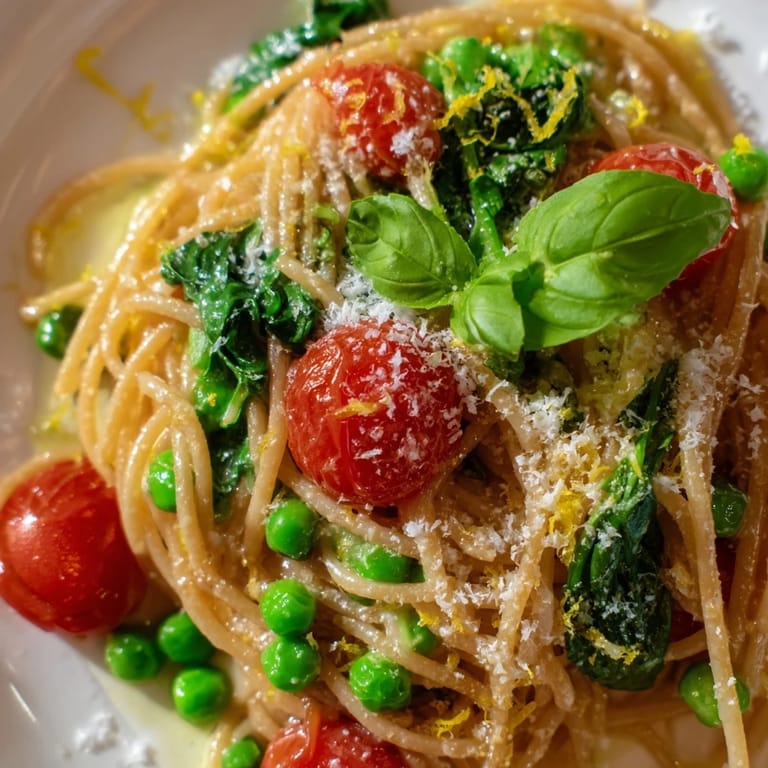
- Divide among warm bowls and shower with grated Parmesan and torn fresh basil. The residual heat will slightly melt the cheese and release the basils oils.
 Pin It
  Pin It
 This recipe has become my go-to for those Tuesday nights when I want something nourishing but cannot face a sink full of dishes. Last week, my neighbor knocked on my door because she could smell the garlic and lemon through the hallway. I ended up sending her home with a container, and she texted me an hour later saying she had already made it twice.
Making It Your Own
The beauty of this one-pot method is how easily it adapts to whatever vegetables you have on hand. I have made versions with asparagus, zucchini, even diced bell peppers, and each one works because the cooking method concentrates flavors so effectively. The key is keeping the vegetable pieces roughly the same size so they cook evenly.
Broth Matters
I learned this lesson the hard way after accidentally using an overly salty commercial broth once. Now I always taste my broth before adding salt to the pot. A homemade vegetable broth or a high-quality store-bought one makes a noticeable difference in the final depth of flavor.
Perfecting Your Timing
After making this dozens of times, I have found that the texture difference between slightly undercooked and perfect al dente is about two minutes. I always taste a piece of pasta two minutes before the recipe suggests, then every minute after that. The residual heat continues cooking the pasta even as you stir in the lemon zest.
- Break spaghetti in half if you are using a smaller pot it makes stirring much easier
- Reserve a tiny amount of pasta water just in case you need to loosen the sauce at the very end
- Grate your cheese fresh from a block rather than using pre-grated for better melting
 Pin It
  Pin It
 There is something deeply satisfying about a meal that comes together in one vessel but tastes like it required hours of attention. This pasta has become my answer to every what is for dinner question this spring.
Recipe FAQs
- → Can I use fresh pasta instead of dried spaghetti?
Fresh pasta cooks much faster than dried, so it would become too soft if simmered for the full time in the broth. Stick with dried spaghetti or adjust cooking time to 3-4 minutes if using fresh pasta.
- → What other spring vegetables work well in this dish?
Asparagus, fresh broad beans, artichoke hearts, or zucchini make excellent additions. Chop them into similar-sized pieces so they cook evenly with the pasta.
- → Can I make this gluten-free?
Absolutely. Simply substitute the regular spaghetti with your favorite gluten-free pasta variety. Brown rice spaghetti holds up particularly well in one-pot cooking methods.
- → How should I store leftovers?
Store in an airtight container in the refrigerator for up to 3 days. The pasta will continue absorbing liquid, so add a splash of water or broth when reheating to restore creaminess.
- → Can I freeze this dish?
Freezing isn't recommended as the pasta texture changes dramatically upon thawing and becomes mushy. This dish is best enjoyed fresh or refrigerated for next-day lunches.
- → What can I substitute for vegetable broth?
Chicken broth works if you're not strictly vegetarian. For a lighter version, use water with an extra tablespoon of olive oil and additional herbs to maintain flavor depth.