 Pin It
 The smell hit me first, a deep tomato sweetness mingling with garlic, before I even stepped through the kitchen door. My neighbor was testing her grandmother's soup recipe, and I happened to drop by at exactly the right moment. She ladled me a bowl, then spooned a bright green swirl across the top. That single taste taught me something important: tomato soup didn't have to be plain or predictable.
I started making this soup on rainy Sundays when the kitchen felt like the only warm place worth being. My daughter would sit at the counter, sneaking pine nuts while I prepped, and we'd talk about her week between the chopping and stirring. The pesto was her idea, actually, after she declared plain tomato soup boring. She was right.
Ingredients
- Olive oil: This forms the flavor base, so use something you'd happily dip bread into, not the dusty bottle from three years ago.
- Onion: Finely chopped onion melts into the soup and adds a gentle sweetness that balances the tomato acidity.
- Garlic cloves: Fresh garlic makes all the difference here, giving the soup a warm, aromatic backbone without overpowering it.
- Ripe tomatoes: If you can find ripe, in-season tomatoes, use them, but good canned whole peeled tomatoes work beautifully and sometimes taste better than off-season fresh ones.
- Tomato paste: A couple of tablespoons deepen the tomato flavor and add body, turning thin soup into something velvety.
- Vegetable broth: This thins the soup to the right consistency and adds savory depth, so choose one with flavor you trust.
- Sugar: Just a teaspoon cuts through any sharpness in the tomatoes and brings out their natural sweetness.
- Salt and black pepper: Season generously, tasting as you go, because under-seasoned tomato soup tastes flat no matter how good your tomatoes are.
- Heavy cream: Stirred in at the end, it gives the soup a silky richness and mellows the acidity into something comforting.
- Fresh basil leaves: The star of the pesto, basil should smell bright and peppery, not sad or wilted.
- Pine nuts: These add a buttery, delicate nuttiness to the pesto, though walnuts or cashews work if pine nuts feel too fancy.
- Parmesan cheese: Freshly grated Parmesan makes the pesto savory and complex, binding everything together with a salty punch.
- Extra virgin olive oil: Use your best olive oil in the pesto since it's not cooked, and the flavor shines through every swirl.
Tired of Takeout? 🥡
Get 10 meals you can make faster than delivery arrives. Seriously.
One email. No spam. Unsubscribe anytime.
Instructions
- Start with the aromatics:
- Heat olive oil in a large pot over medium heat, then add the chopped onion and cook until it turns soft and translucent, about five minutes. You want it sweet and yielding, not browned.
- Add the garlic:
- Stir in the minced garlic and cook for just one minute until it smells fragrant and fills the kitchen. Don't let it brown or it'll turn bitter.
- Build the tomato base:
- Add the chopped tomatoes and tomato paste, stirring everything together. Let it cook for five minutes, stirring occasionally, so the tomato paste loses its raw edge and the tomatoes start breaking down.
- Simmer the soup:
- Pour in the vegetable broth, then add sugar, salt, and pepper. Bring everything to a boil, reduce the heat, and let it simmer uncovered for 20 minutes until the flavors meld and the tomatoes are fully softened.
- Make the pesto:
- While the soup simmers, combine basil, pine nuts, garlic, and Parmesan in a food processor and pulse until finely chopped. With the motor running, drizzle in the olive oil until the pesto turns smooth and bright green, then season with a pinch of salt.
- Blend the soup:
- Once the soup has simmered, use an immersion blender to puree it until completely smooth, or carefully blend it in batches in a countertop blender. Be cautious with hot liquid.
- Finish with cream:
- Stir in the heavy cream, taste, and adjust the seasoning if needed. Warm the soup through gently but don't let it boil, or the cream might separate.
- Serve with pesto:
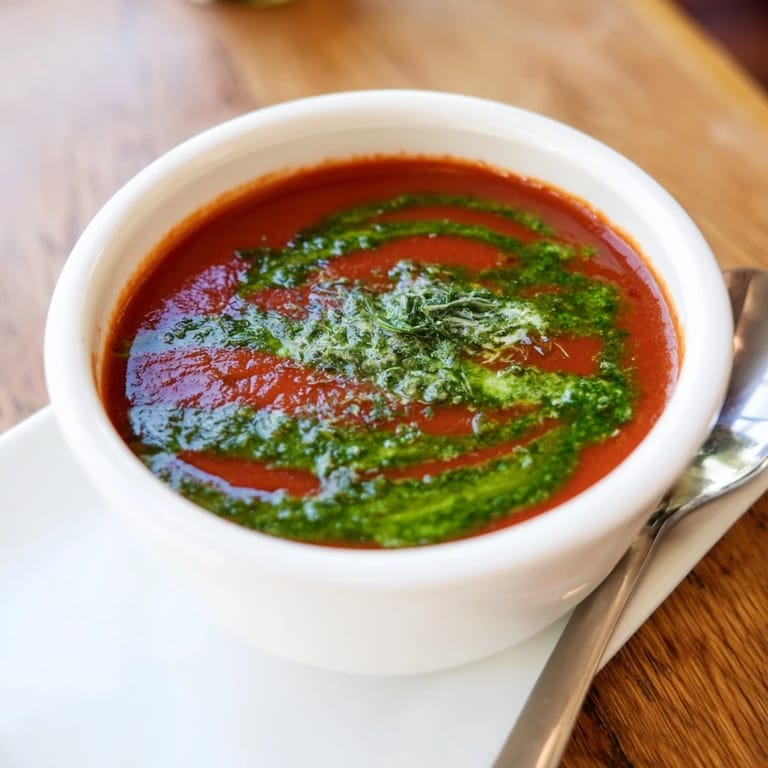
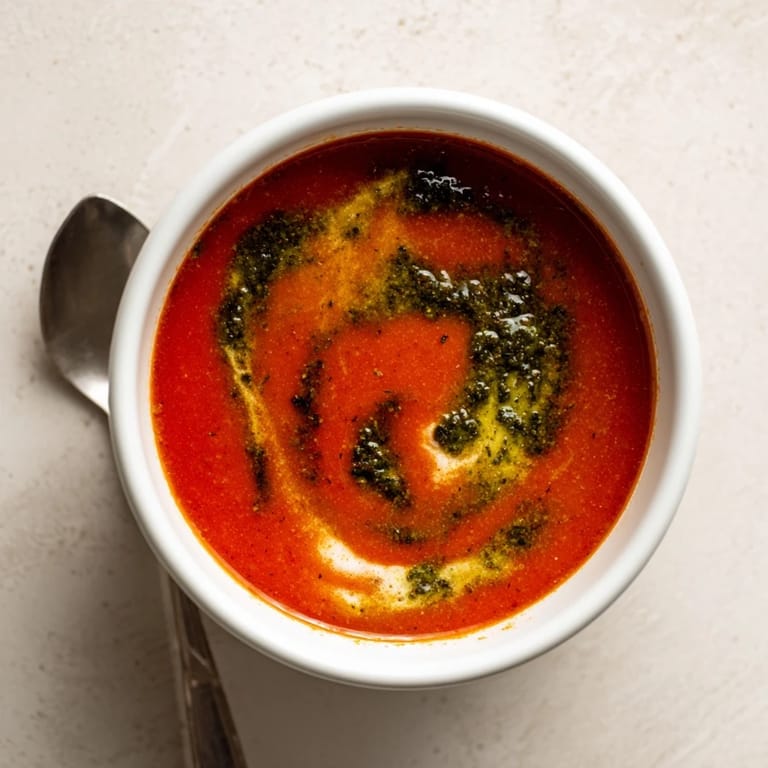
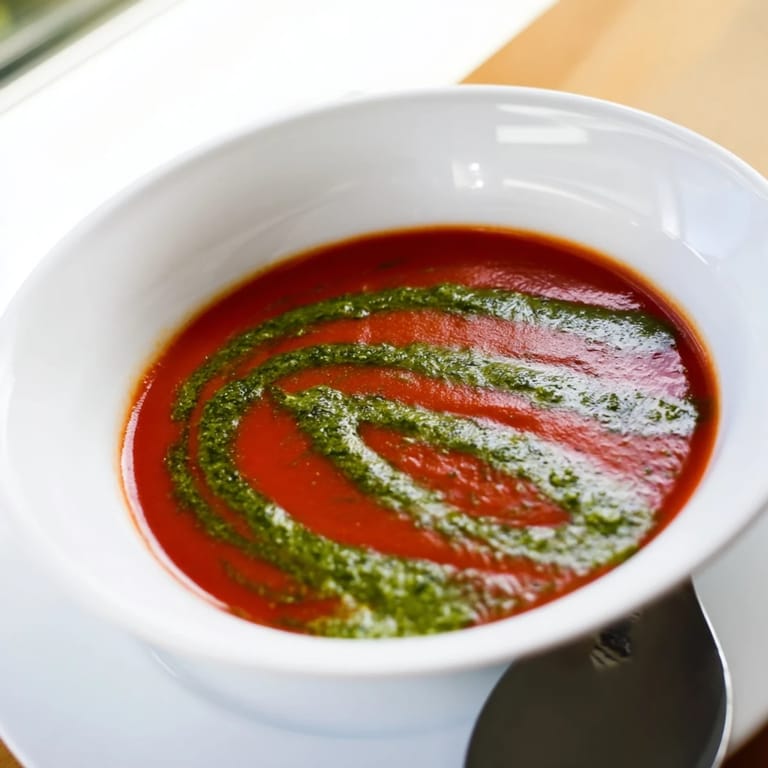
- Ladle the soup into bowls and drizzle each serving with a generous swirl of basil pesto. Serve immediately while it's hot and the pesto is vibrant.
 Pin It
 One winter evening, I made this soup for a friend going through a rough patch. We sat at my small kitchen table, not saying much, just dipping bread into our bowls and letting the warmth do the talking. She later told me it was the pesto swirl that made her smile, the little extra touch that reminded her good things still existed. Sometimes that's all a bowl of soup needs to be.
Choosing Your Tomatoes
Fresh tomatoes are glorious in summer when they're heavy, fragrant, and bursting with juice. But outside of peak season, canned whole peeled tomatoes often taste better and more consistent than pale, mealy fresh ones. I keep both on hand and let the calendar decide. San Marzano tomatoes are worth it if you can find them, but any quality canned tomato will do the job beautifully.
Making It Your Own
This soup is endlessly adaptable once you know the basic rhythm. I've added roasted red peppers for sweetness, a pinch of chili flakes for heat, or a splash of balsamic vinegar for extra depth. Some nights I skip the pesto entirely and swirl in a spoonful of cream cheese or a drizzle of good olive oil. The soup itself is the foundation, and you can dress it up or down depending on your mood and what's in the pantry.
Storing and Reheating
The soup keeps beautifully in the fridge for up to four days and actually tastes better the next day after the flavors settle. I store the pesto separately in a small jar with a thin layer of olive oil on top to keep it bright green. When reheating, warm the soup gently on the stove and add a splash of broth or water if it's thickened too much.
- Freeze the soup without the cream for up to three months, then stir in fresh cream after reheating.
- Pesto freezes well in ice cube trays, so you can pop out a cube anytime you need a quick flavor boost.
- Reheat only what you plan to eat, because repeated heating dulls the bright tomato flavor.
 Pin It
 This soup has become my answer to cold days, unexpected guests, and moments when I need something simple but soul-filling. I hope it does the same for you.
Recipe FAQs
- → Can I use canned tomatoes instead of fresh?
Absolutely. Two 400g cans of whole peeled tomatoes work perfectly as a substitute for fresh tomatoes. They're often more convenient and deliver consistent flavor year-round.
- → How do I make this soup vegan?
Replace the heavy cream with coconut cream for richness, and use a vegan Parmesan alternative or nutritional yeast in the pesto. The soup will remain just as creamy and delicious.
- → What are good alternatives to pine nuts?
Walnuts, cashews, or almonds work wonderfully in the pesto. They provide similar texture and richness while offering different flavor profiles based on your preference.
- → Can I prepare the pesto in advance?
Yes, make the pesto up to one day ahead and store it in an airtight container in the refrigerator. You can also freeze it for up to three months. Add it to the soup just before serving.
- → What should I serve alongside this soup?
Crusty bread, grilled cheese sandwiches, or focaccia make excellent accompaniments. A simple green salad also pairs well for a balanced meal.
- → How do I achieve a perfectly smooth texture?
An immersion blender gives the smoothest results and requires less cleanup. If using a countertop blender, blend the soup in batches and allow it to cool slightly for safety.