 Pin It
 My first real bowl of miso soup came on a gray Tokyo morning when I was completely lost, wandering the narrow streets near Tsukiji Market. A tiny restaurant owner gestured me inside, and within minutes, a steaming bowl appeared—the aroma alone seemed to settle something restless in my chest. That simple combination of umami-rich broth, silky tofu, and whispers of seaweed taught me that sometimes the most profound comfort comes from the fewest ingredients, prepared with intention.
I made this for a friend who'd just moved to the city feeling overwhelmed and homesick, though she'd never been to Japan. She took one spoonful and her shoulders dropped—she said it tasted like what comfort should feel like. That's when I realized miso soup isn't really about following a recipe; it's about understanding that sometimes people need something warm and honest.
Ingredients
- Dashi stock (4 cups): This is the soul of the soup—use vegetarian kombu and shiitake if you're plant-based, and don't skip making it fresh if you can, though quality instant dashi works beautifully in a pinch.
- White or yellow miso paste (3 tablespoons): This is where the probiotic magic lives, so choose one you can actually read the label on and store it in the fridge to keep it alive.
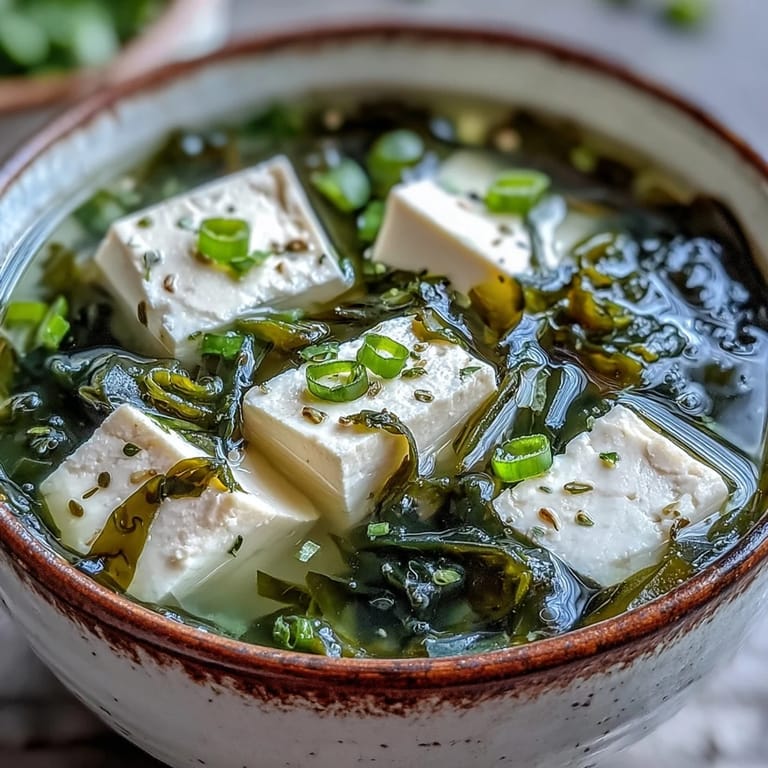
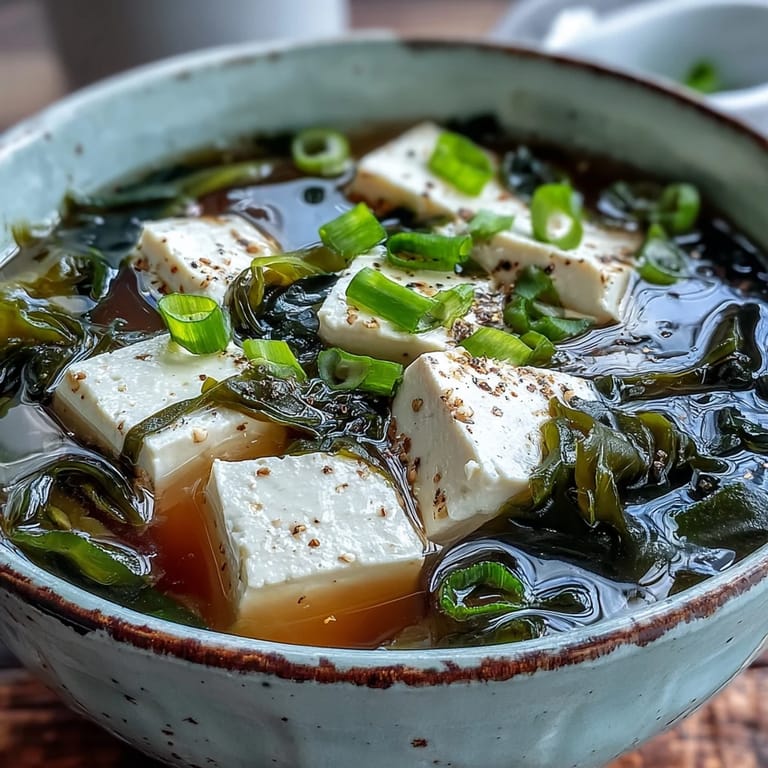
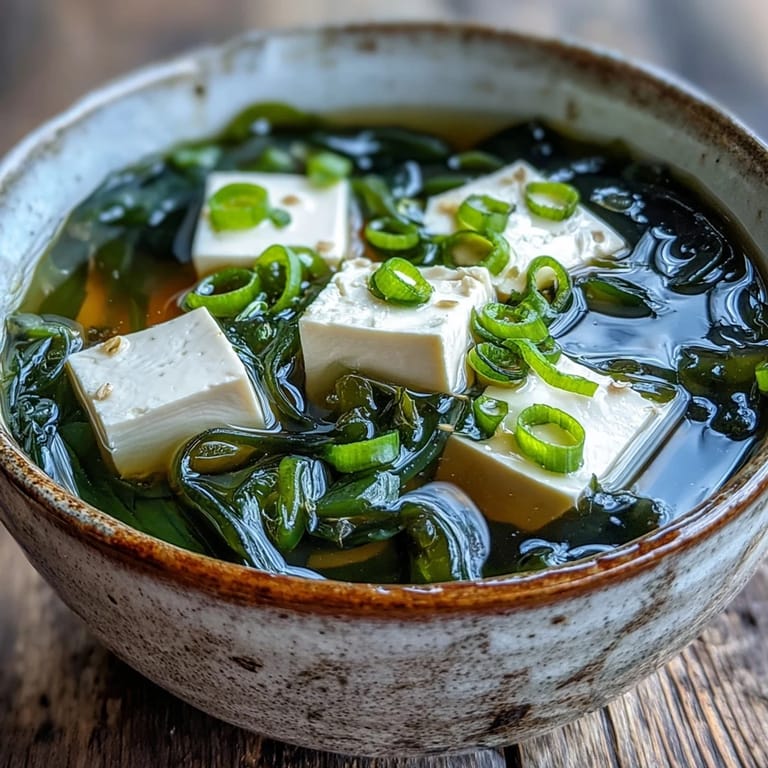
- Silken tofu (200 g, cut into 1/2-inch cubes): Treat it gently—silken tofu is delicate and rewards a light hand with its custard-like texture that melts on your tongue.
- Dried wakame seaweed (2 tablespoons): Those little dark curls unfurl into tender ribbons and bring oceanic depth that you can't replicate any other way.
- Scallions (2, finely sliced): Save these for the end as a bright, sharp finishing note that wakes up every other flavor in the bowl.
Tired of Takeout? 🥡
Get 10 meals you can make faster than delivery arrives. Seriously.
One email. No spam. Unsubscribe anytime.
Instructions
- Warm your foundation gently:
- Pour your dashi into a medium saucepan and let it come to a gentle simmer over medium heat—you want steam rising quietly, not a rolling boil. This slow warming means the flavors have time to settle and deepen.
- Prepare the seaweed while you wait:
- Drop the wakame into a small bowl of cold water and let it soak for five minutes, watching as those thin, crispy sheets soften and expand. Drain it well before adding to the soup.
- Dissolve the miso into silky submission:
- Scoop the miso paste into a small bowl and ladle in some of that hot dashi, then whisk steadily until you have a smooth, lump-free mixture. This extra step means no grainy texture hiding in your finished soup.
- Nestle in the delicate ingredients:
- Gently add the tofu cubes and drained wakame to your simmering broth, letting them warm through for two to three minutes—move slowly and deliberately so the tofu stays intact. You're not trying to cook anything further; you're just bringing everything to the same gentle temperature.
- Marry the miso without heat:
- Remove the saucepan from the heat, then stir in your dissolved miso paste with a calm hand. Never let it boil after the miso goes in, because heat destroys the living probiotics and flattens the complex flavor.
- Finish and serve with intention:
- Ladle into bowls and crown each one with those bright scallion slices, then serve immediately while the steam still carries all the aromatics to your nose. This is a soup meant to be eaten right now, at this temperature, in this moment.
 Pin It
 One winter evening, my grandmother taught me that miso soup isn't a recipe you master so much as a soup you learn to listen to—each ingredient has something to say if you're paying attention. Watching her adjust the seasoning with the smallest pinch of extra miso, tasting and pausing thoughtfully, I understood that this is how real cooking works.
When You Want to Go Deeper
If plain miso soup feels too simple, try blending equal parts white and red miso for a richer, more complex base—the red adds earthiness and depth while the white keeps it from becoming too heavy. Add thinly sliced mushrooms or fresh spinach if you want more substance, stirring them in just before the miso so they stay tender and bright.
The Seaweed Secret
Most people skip making their own dashi because it sounds complicated, but wakame teaches you why it matters—when you use real dashi, every spoonful tastes like the ocean was somehow concentrated into something warm and nurturing. The seaweed itself carries minerals and umami that make the entire bowl feel more nourishing, so never be tempted to skip it or use a substitute.
Variations That Feel Natural
This soup welcomes small changes without losing its soul—add steamed rice on the side for something more substantial, or serve it before a meal as the Japanese do, in tiny cups as an opener. Some days I add a raw egg yolk that cooks gently in the hot broth, other days I keep it exactly as written and find that's exactly what I needed.
- For a vegan version, confirm your dashi contains only kombu and shiitake, with no fish or shellfish anywhere in the ingredient list.
- If anyone at your table has a soy allergy, this soup can't be safely made, but you can create something similar using a miso-free broth base with tofu and seaweed.
- Pairs perfectly alongside steamed rice, a simple green salad, or eaten entirely on its own as a light, complete meal.
 Pin It
 Miso soup teaches you that food doesn't need to be complicated to be profound. Make it tonight, and tomorrow, and again whenever you need something that tastes like it was made specifically for you.
Recipe FAQs
- → What type of miso works best?
White or yellow miso paste offers a milder, sweeter flavor ideal for this preparation. Red miso provides a deeper, more intense taste if you prefer stronger umami notes.
- → Can I make this vegan?
Yes, simply use kombu and shiitake-based dashi instead of traditional bonito fish stock. Most miso pastes are naturally plant-based, but always check labels to confirm.
- → Why not boil the miso?
Boiling miso paste destroys its beneficial probiotics and enzymes, while also creating an unpleasant gritty texture. Always dissolve it off-heat for smooth, nutritious results.
- → What vegetables can I add?
Thinly sliced shiitake mushrooms, baby spinach, snow peas, or diced daikon radish all complement the savory broth beautifully while maintaining the delicate balance.
- → How long does this keep?
Best enjoyed immediately, as tofu continues to absorb liquid and seaweed may become overly soft. The broth can be stored separately for 2-3 days and reheated gently.
- → Can I use instant dashi?
Instant dashi granules work in a pinch, though homemade kombu-shiitake stock offers superior depth and cleaner flavor without additives or excessive sodium.