 Pin It
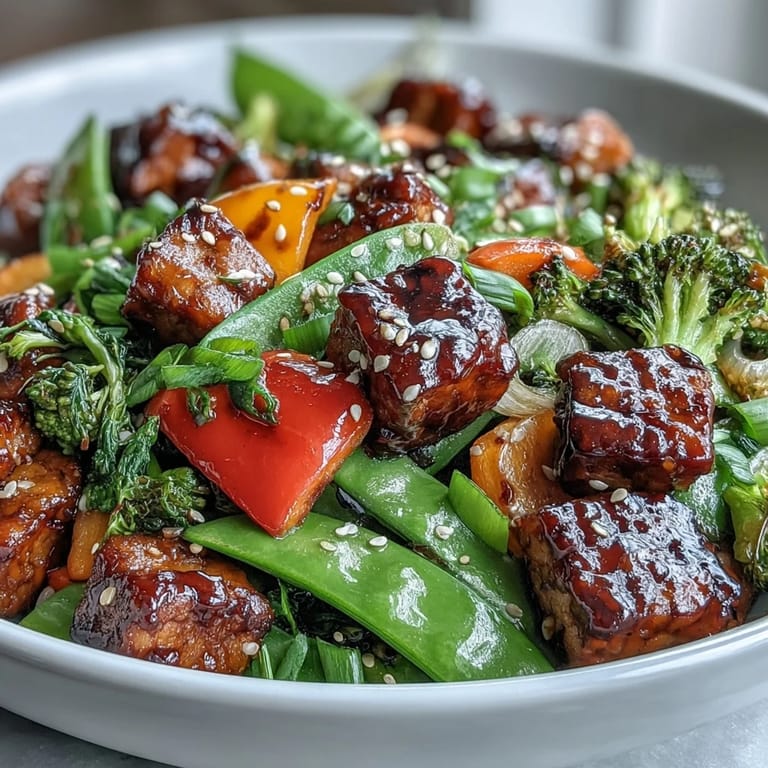
 I stumbled onto tempeh stir-fry by accident one Tuesday when I'd forgotten to thaw chicken and had a block of tempeh quietly sitting in my fridge. Twenty minutes later, my kitchen smelled incredible—that nutty, golden tempeh sizzling in the wok while colorful vegetables danced around it. It became the dish I now make when I want something that feels effortless but tastes deliberately thoughtful, every time.
My partner was skeptical about tempeh until I made this for dinner after a particularly exhausting week at work. Watching them go back for seconds while barely looking up told me everything—this wasn't just healthy weeknight food, it was the kind of dish that quietly converts people without making a big deal about it.
Ingredients
- Tempeh, cut into 1 cm cubes (250 g): This fermented soybean cake has a firmer texture and nuttier flavor than tofu, and it actually holds up to high heat without falling apart—press it lightly with paper towels first if you want it extra-crispy.
- Red and yellow bell peppers, sliced (1 of each): The colors matter here, honestly, not just for looks but because they cook at slightly different rates and create layers of sweetness.
- Carrot, julienned (1 medium): Cut into thin matchsticks so it picks up heat quickly and stays snappy in the middle, not mushy.
- Sugar snap peas, trimmed (100 g): These stay crisp if you don't overcrowd the pan, and they add a natural sweetness that balances the savory sauce.
- Broccoli florets (100 g): Smaller florets cook more evenly; larger ones can finish cooking while the sauce thickens.
- Spring onions, sliced (2): Add these at the very end so they stay bright and crunchy, not soft.
- Garlic and fresh ginger, minced (2 cloves and 2 cm piece): Mince them fine so they distribute into every bite and bloom quickly in hot oil.
- Soy sauce (3 tbsp): Use tamari if you need gluten-free; the umami depth is what makes this sauce sing.
- Water (2 tbsp): Balances the saltiness and gives the sauce room to coat everything evenly.
- Rice vinegar (1 tbsp): Adds brightness without overpowering; white vinegar works in a pinch but tastes slightly sharper.
- Maple syrup or agave nectar (1 tbsp): Just enough sweetness to round out the savory elements—don't skip this.
- Toasted sesame oil (1 tsp): A small amount goes a long way; regular sesame oil burns too easily, so make sure it's the toasted kind.
- Cornstarch (1 tsp): This is what transforms the sauce from thin liquid to glossy coating; whisk it into the cold sauce before adding it to the hot wok.
- Vegetable oil (2 tbsp): Use something with a high smoke point like sunflower or canola oil so your tempeh gets properly golden.
- Toasted sesame seeds and fresh coriander (optional garnish): These finish the dish with texture and freshness that makes people notice what you've done.
Tired of Takeout? 🥡
Get 10 meals you can make faster than delivery arrives. Seriously.
One email. No spam. Unsubscribe anytime.
Instructions
- Mix Your Sauce First:
- Whisk together soy sauce, water, rice vinegar, maple syrup, sesame oil, and cornstarch in a small bowl and set it aside—this step takes ninety seconds but prevents you from scrambling later when the wok is hot and everything is moving fast.
- Brown the Tempeh:
- Heat one tablespoon of oil in your wok or large skillet over medium-high heat and add the tempeh cubes, letting them sit undisturbed for a minute or two before stirring so they develop that golden crust. This takes about four to five minutes total and transforms the tempeh from pale and mild into something nutty and substantial.
- Bloom the Aromatics:
- Push the tempeh to the side, add the remaining oil, and immediately scatter in your garlic and ginger, stirring constantly for just thirty seconds so the heat releases their fragrance without burning them. This quick step is what makes people ask what smells so good.
- Stir-Fry the Vegetables:
- Add your peppers, carrot, snap peas, and broccoli all at once, then keep everything moving with your spatula for about four to five minutes until the vegetables are bright and just tender but still have a snap when you bite one. The key is medium-high heat and constant movement—no crowding, no covering.
- Bring Everything Together:
- Return the tempeh to the wok, give your sauce a final quick stir to make sure the cornstarch is evenly distributed, then pour it over everything and toss for one to two minutes until the sauce turns glossy and clings to each piece. You'll see it thicken slightly and that's when you know it's ready.
- Finish with Brightness:
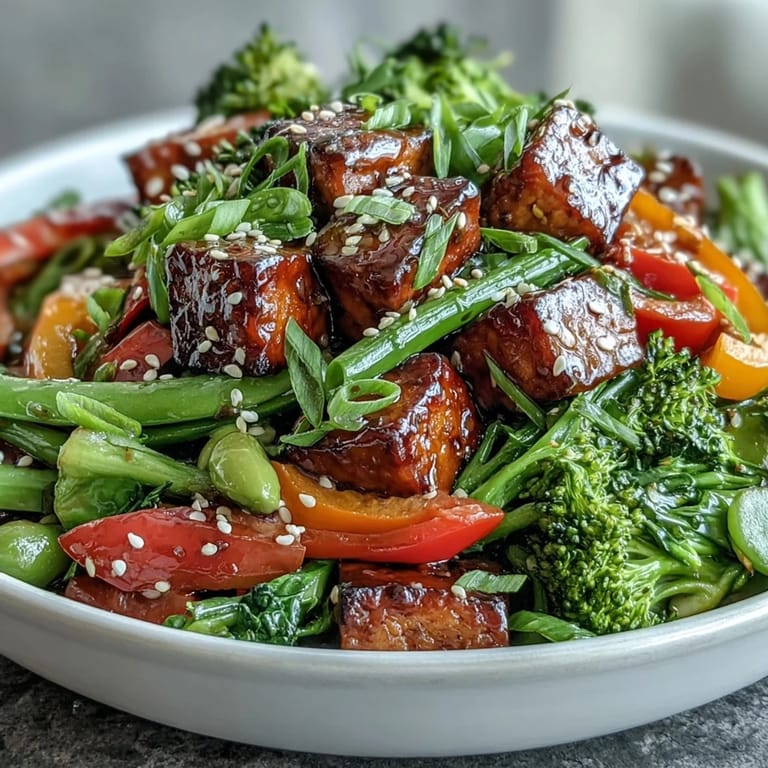
- Remove from heat, scatter the spring onions across the top, and add sesame seeds and coriander if you're using them—this final step adds texture and a fresh note that cuts through the richness of the sauce.
 Pin It
 There's something about cooking this stir-fry that feels meditative—the sound of the spatula against hot metal, the way the kitchen fills with ginger and garlic before anything else happens, the colors going from dull raw vegetables to vibrant cooked ones in minutes. It reminded me that the best meals don't always require hours or complicated techniques, just attention and a hot pan.
Why This Works for Weeknight Cooking
This recipe respects the fact that you're tired after work but still want something that tastes like you cared. Everything happens in one pan, ingredients go in a logical order so you're not juggling a dozen bowls, and fifteen minutes of actual cooking means you're eating before your hunger turns into making questionable choices. The best part is how it scales—hungry crowd or just you, the technique stays exactly the same.
Making It Your Own
I've learned that this recipe is genuinely flexible without becoming a free-for-all. Swap in mushrooms, baby corn, or zucchini if that's what you've got, keeping in mind that denser vegetables might need an extra minute and watery ones like zucchini should go in toward the end. The sauce is forgiving enough that you can adjust the sweetness or salty balance slightly, though I'd recommend tasting it cold first before making wild changes.
Heat and Flavor Variations
Some nights I want this exactly as written—clean, balanced, letting the tempeh and vegetables be the main event. Other nights, especially when I'm cooking for people who like heat, I'll add chili flakes or a splash of sriracha to the sauce, or even drizzle it over at the table so everyone controls their own spice level. Rice vinegar can be swapped for a lighter touch, and if you have lime juice around, just a teaspoon of that instead of some of the water adds a different kind of brightness.
- For heat, add chili flakes or sriracha to taste rather than fixing them all at once.
- Rice noodles or soba noodles are perfect underneath this, but jasmine rice is the classic pairing.
- Leftovers actually taste better the next day when the flavors settle, though reheating should happen gently rather than at high heat.
 Pin It
 This dish taught me that plant-based cooking doesn't mean settling or eating something virtuous that you're only half-enjoying. It means discovering that sometimes the best flavors are hiding in places you didn't expect to look.
Recipe FAQs
- → How do I prevent tempeh from being bitter?
Tempeh can have a naturally bitter taste. To reduce this, try steaming the cubes for 10 minutes before stir-frying, or pan-fry them longer until deeply golden on all sides. The browning process helps mellow the flavor.
- → Can I make this gluten-free?
Absolutely. Simply substitute regular soy sauce with tamari or coconut aminos. All other ingredients, including tempeh, are naturally gluten-free. Always check your tempeh brand to ensure no gluten-containing grains were used in fermentation.
- → What vegetables work best in this stir-fry?
Choose vegetables that maintain some crunch when cooked quickly. Bell peppers, broccoli, snap peas, carrots, and green beans are excellent. Avoid delicate vegetables like spinach or tomatoes that would wilt excessively during the high-heat cooking process.
- → How long will leftovers keep?
Stored in an airtight container in the refrigerator, leftovers will keep for 3-4 days. Reheat gently in a skillet over medium heat, adding a splash of water if the sauce has thickened too much. The vegetables will soften but remain enjoyable.
- → Can I add more protein?
Yes, you can incorporate edamame, cubed tofu, or even cashews alongside the tempeh. If adding extra protein, consider increasing the sauce ingredients by half to ensure everything remains well-coated and flavorful.